The Langtang Valley Trek is one of the most rewarding short adventures available to anyone looking for trekking in Nepal without a long approach or a big time commitment. Often called the "Valley of Glaciers," Langtang National Park offers a rare combination of accessibility and wilderness glacier-fed rivers, rhododendron forests, yak pastures, and Tamang villages steeped in Tibetan Buddhist tradition, all within a few hours' drive of the capital.
This 8–10 day journey takes you from Syabrubesi through pine and bamboo forests to the rebuilt Langtang Village, and on to the sacred grounds of Kyanjin Gompa, where the trail opens up to reveal Langtang Lirung and a ring of 7,000 meter peak. From here, energetic trekkers climb to Kyanjin Ri (4,773 m) or the higher Tserko Ri (4,984 m) for one of the finest panoramic mountain views in the country. Rated a moderate trek, it suits both first-time trekkers with a reasonable fitness level and seasoned hikers looking for something shorter than the classic Everest Base Camp Trek or Annapurna Base Camp Trek routes. Spring and autumn are the best seasons, when clear skies and blooming rhododendrons make every day on the trail memorable. Whether you're planning your first hiking in Nepal experience or adding a quieter route to a longer tour in Nepal, the Langtang Valley Trek Package delivers big mountain rewards on a manageable timeline.
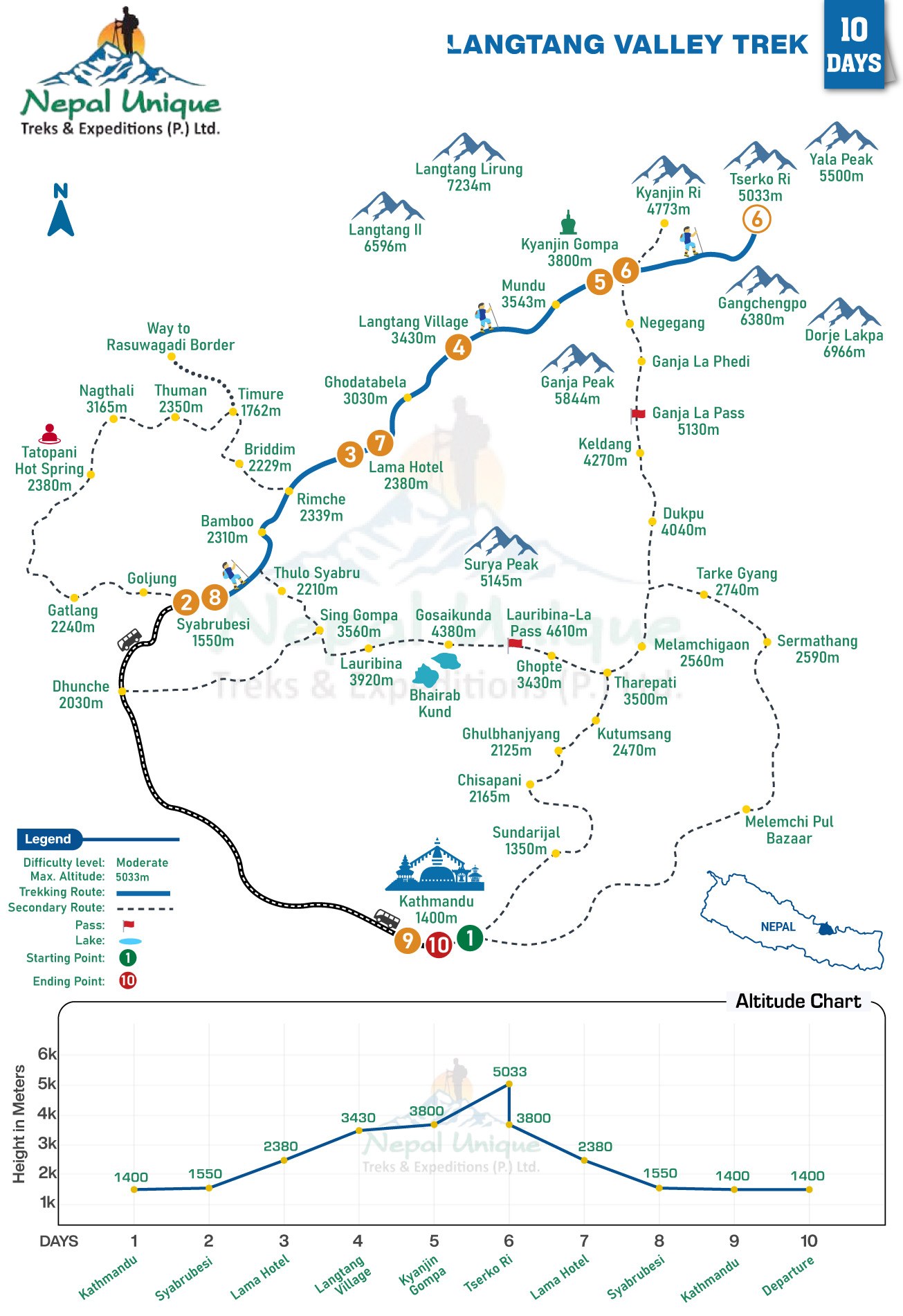
Route: Kathmandu, Syabrubesi, Lama Hotel, Langtang Village, Kyanjin Gompa, Kyanjin Ri/Tserko Ri, return via the same trail Lama Hotel, Syabrubesi and Kathmandu.
The trail follows the Langtang Khola upstream for most of the route, so the walking is steady rather than punishing. Daily stages generally run between 5 and 7 hours, covering roughly 10–15 km depending on the day, with the steepest climbing concentrated on the day into Lama Hotel and the summit push to Kyanjin Ri or Tserko Ri. Altitude gain is gradual through the lower valley, then accelerates above Langtang Village, which is why most itineraries build in time at Kyanjin Gompa to acclimatize.
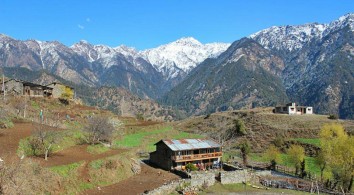
The scenery changes noticeably as you climb. The lower trail passes through subtropical forest, bamboo groves, and small farming settlements, then gives way to pine and rhododendron forest around Lama Hotel. Above Langtang Village, tree cover thins into alpine meadows, glacial moraine, and finally the wide-open, rock-and-ice landscape near Kyanjin Ri. Along the way, keep an eye out for langur monkeys, pheasants, and, if you're fortunate, the elusive red panda in the forested lower sections.
The final price of a Langtang Valley Trek Package depends on several factors:
• Group size larger groups typically reduce the per-person cost of guides, porters, and transport.
• Trek duration an 8-day itinerary costs less than a 10-day version with extra acclimatization or side trips.
• Transportation a private jeep costs more than a shared local jeep or bus to Syabrubesi.
• Accommodation type standard tea houses are more affordable than upgraded rooms with attached bathrooms.
• Private vs. shared trek a solo, fully private trek costs more per person than joining a group departure.
• Guide and porter services hiring a licensed guide and porter adds to the cost but greatly improves safety, comfort, and cultural insight.
| Package Type | Group Size | Price (USD) | Duration |
| Regular Trek Package | Trekkers: 1 Trekkers: 2/4 Trekkers: 5/8 | USD$695 Per Person USD$595 Per Person USD$ 550 Per Person | 11 Days |
| Luxury Trek Package | Trekkers: 2 Trekkers: 4 Trekkers: 6 to 8 | USD$ 1295 Per Person USD$ 1195 Per Person USD$ 1050 Per Person | 11 Days |
Rhododendron forests burst into red, pink, and white bloom, turning the lower trail into one of the most colorful stretches of any trek in Nepal. Weather is generally stable, and mountain views stay clear through most of the day.
Widely considered the best season for the Langtang Valley Trek. Post-monsoon skies bring excellent visibility, comfortable daytime temperatures, and the busiest trail traffic of the year, making it a favorite for both first-time and repeat trekkers.
The valley takes on a quiet, snow-dusted character. Trails see far fewer trekkers, and mornings and evenings are cold, especially near Kyanjin Gompa, but clear winter days can offer some of the sharpest mountain views of the year.
Rain is frequent and trails can be slippery, but the valley turns intensely green. Because Langtang sits on a relatively lee-side route compared to some other regions, many sections remain accessible, appealing to trekkers who don't mind occasional showers in exchange for lush scenery and near-empty trails.
The Langtang Valley Trek is graded moderate approachable for first-timers, but not a casual walk. Most days involve 5–7 hours of walking on well-established trails, with some steady uphill sections rather than technical climbing. The main challenge is altitude: trekkers gain height steadily above Langtang Village, and the push to Kyanjin Ri or Tserko Ri above 4,700 m can feel demanding without proper acclimatization.
Trail conditions are generally good, with stone steps, forest paths, and open ridgelines; snow and ice can appear in winter at higher points. A baseline level of fitness being able to walk several hours on consecutive days is far more important than prior trekking experience. The trek suits a wide age range, from fit teenagers to active trekkers in their 60s and beyond, provided they prepare with some cardio training, practice hikes, and a realistic pace that allows for acclimatization.
Tea houses along the Langtang route offer simple, welcoming lodging: twin-share rooms with a bed, blankets, and basic furnishings, warming up considerably as you approach Kyanjin Gompa where lodges cater specifically to trekkers. Bathrooms are mostly shared and, at lower elevations, occasionally attached; hot showers are usually available for a small extra fee.
Meals are hearty and trail-tested, ranging from traditional Nepali dal bhat to international options like pasta, soup, and fried rice, with the local Yak Cheese Factory adding a unique regional touch to the menu. Bottled and boiled drinking water are both available, though carrying a filter or purification tablets is a smart, eco-friendly backup. Wi-Fi and device charging are offered at most tea houses for an additional fee, though connections become slower and pricier the higher you climb.
Two permits are mandatory for the Langtang Valley Trek:
The trek begins with a drive from Kathmandu to Syabrubesi, available by private vehicle for comfort and flexibility or by local jeep for a more budget-friendly option. The journey takes roughly 7–8 hours by road, following winding hill roads that pass through mid-hill villages and river valleys conditions can be rough in places, especially during or just after monsoon season. The return journey follows the same route back to Kathmandu once the trek concludes at Syabrubesi.
Upon your arrival at the Tribhuvan International Airport in Kathmandu, you will be met by our representative who will transfer you to your hotel. You can spend the rest of the day exploring the city and preparing for the trek.
Early in the morning, we will take a scenic drive from Kathmandu to Syabrubesi. It is a 7-8 hour drive that passes through beautiful Nepalese countryside and small towns. We will spend the night in Syabrubesi.
We will begin our trek by following the Langtang River upstream, passing through dense forests of rhododendron and bamboo. Along the way, we may spot various wildlife such as red pandas, musk deer, and Himalayan black bears. We will spend the night at Lama Hotel.
Today, we will trek further up to Langtang Village, passing through more dense forests and crossing several suspension bridges. Langtang Village was heavily damaged by the earthquake in 2015 but has since been rebuilt. We will spend the night in Langtang Village.
We will continue our trek further up to Kyanjin Gompa, a beautiful Buddhist monastery located at an altitude of 3,800 meters. Along the way, we will enjoy stunning views of the Langtang Lirung (7,234m), Gang Chhenpo (6,388m), and other snow-capped peaks. We will spend the night in Kyanjin Gompa.
Today, we will take a day hike to Tserko Ri, a viewpoint that offers stunning panoramic views of the surrounding Himalayan peaks. It is a challenging hike but well worth the effort. We will return to Kyanjin Gompa for the night.
Early morning Visit to Tserko Ri 4984 m, 9 hrs round trip
Today, we will retrace our steps and trek back down to Lama Hotel. We will spend the night at Lama Hotel.
Today, we will trek back to Syabrubesi, where we started our trek. We will spend the night in Syabrubesi.
Today, we will take a scenic drive back to Kathmandu, where you will have the rest of the day to explore the city, do some shopping, or relax. We will organize a farewell dinner in the evening to celebrate the completion of the trek.
Our representative will transfer you to the airport for your flight back home, marking the end of your Langtang Valley Trek.
Note: Nepal Unique Treks will make every effort to assist clients during the Everest Base Camp Trek and domestice flight delays, weather disruptions, natural disasters, or other unforeseen situations. However, any additional expenses incurred will be the responsibility of the client.
The Langtang Valley in Nepal was severely affected by the earthquake that struck Nepal in April 2015, causing landslides and avalanches that resulted in many deaths and widespread destruction. The safety of trekking in Langtang Valley after the earthquake depends on various factors, such as the extent of damage to the area, the current state of the trails and infrastructure, and the availability of emergency services.
In the years following the earthquake, efforts have been made to restore the trails and rebuild infrastructure in the Langtang Valley. However, some areas may still be prone to landslides or other hazards, and it is essential to take appropriate precautions and follow the advice of experienced guides.
It is recommended to trek with a reputable trekking company that has up-to-date information about the current state of the trails and the safety of the area. They can help ensure that you have a safe and enjoyable experience while trekking in the Langtang Valley.
It is also advisable to check with the local authorities and obtain the necessary permits and information before embarking on the trek. With proper planning and preparation, it is possible to trek safely in the Langtang Valley after the earthquake, but it is always essential to exercise caution and be prepared for any potential risks or challenges that may arise.
• Experienced, local trekking guides who know the Langtang region in every season.
• A government-registered trekking company with a strong safety record.
• Personalized itineraries built around your fitness level, schedule, and interests.
• Small group departures for a more personal, less crowded trekking experience.
• Competitive, transparent pricing with no hidden costs.
• 24/7 customer support before, during, and after your trek.
• Flexible booking policy that adapts to changing travel plans.
• Rigorous safety standards, from guide training to emergency planning.
• A strong track record of positive client reviews from trekkers around the world.
• A genuine commitment to responsible and sustainable tourism in every region we operate.
Beyond Langtang, Nepal Unique Treks also specializes in the Gosaikunda Lake Trek, the world-famous Everest Base Camp Trek, the ever-popular Annapurna Base Camp Trek, the remote and rewarding Manaslu Circuit Trek, and the classic Annapurna Circuit Trek giving you a trusted partner for every kind of tour in Nepal, from short valley walks to demanding high-altitude expeditions.
Find answers to the most frequently asked questions about this tour.
It's rated moderate — manageable for fit beginners, with the main challenge being altitude rather than technical terrain.
Most itineraries run 8–10 days, including the drive to and from Syabrubesi.
Spring (March–May) and autumn (September–November) offer the most stable weather and clearest mountain views.
Prices typically range from around $550 for a standard group trek to $1,000+ for private or fully customized itineraries.
While independent trekking is technically possible, a licensed guide adds significant safety, route knowledge, and cultural insight — highly recommended.
Yes, particularly above Langtang Village. Proper acclimatization, hydration, and a sensible pace greatly reduce the risk.
The Langtang National Park Entry Permit and a TIMS Card are both required.
Yes, most tea houses offer Wi-Fi for a small fee, though connections weaken at higher altitudes.
Yes, with a reasonable level of fitness and some pre-trek preparation, Langtang is one of Nepal's most beginner-friendly high-altitude treks.
Layered clothing, sturdy trekking boots, a warm sleeping bag, trekking poles, and basic first aid essentials, among other trail items listed above.
No, ATMs are not available past Syabrubesi, so carry enough cash from Kathmandu for the full trek.
Yes, Nepal Unique Treks offers fully customizable itineraries, including extra acclimatization days or side trips.
Yes, bottled and boiled water are sold at tea houses, and water purification tablets or a filter are recommended as backup.
Trekkers may spot langur monkeys, Himalayan tahr, colorful pheasants, and occasionally the rare red panda in the lower forested sections.
You can book directly through Nepal Unique Treks by contacting our team, who will help design and confirm your Langtang Valley Trek Package.
Nepal 
Nepal
Nepal
Nepal
Nepal

 WhatsApp
 Plan Your Trip


.jpg)


 Reviews 5/5
 Reviews 5/5
 Reviews 5/5