 WhatsApp
 Plan Your Trip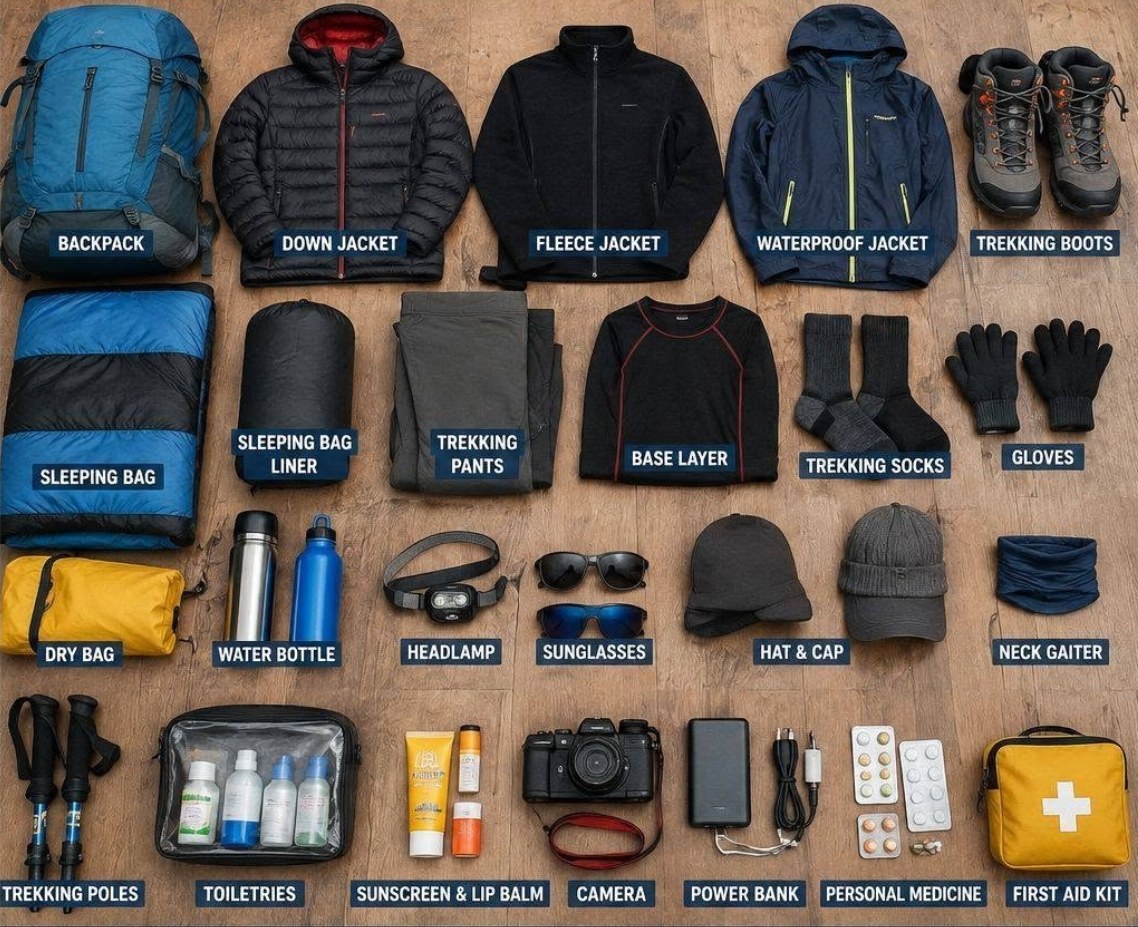
Everest Base Camp Trek – Trekking Gear List
The Everest Base Camp Trek is a challenging high-altitude adventure in the Everest region, and Trekking in Nepal. The trek takes you through Namche Bazaar 3440 m, Tengboche3860 m, Dingboche 4410 m, Everest Base Camp 5364 m, Kala Patthar 5550 m, Cho La Pass 5420 m, and the beautiful Gokyo Valley Trek. Proper trekking gear is essential for comfort, safety, and successful completion of the trek, especially while crossing the Kongmala Pass, Cho La Pass and Renjola Pass at around 5,420 meters (17,782 feet). You do not need to bring everything listed below from home. Many trekking items and clothing can be purchased or rented in Kathmandu, and your trekking company can help you arrange any essential equipment.
1. Head & Face Protection
- Warm wool or fleece hat
- Sun hat or cap
- Neck gaiter or buff
- Balaclava for very cold conditions
- Sunglasses with UV protection
- Glacier sunglasses for high-altitude conditions
- Ski goggles, particularly useful during snow and strong winds
- Sunscreen SPF 30–50+
- Lip balm with SPF
- Lightweight face mask or scarf
2. Upper Body Clothing
A layering system is the best approach for the Everest Region Trekking.
Recommended Trips
Trips You May Like
Hand-picked Nepal trips related to this article.
- 2–3 moisture-wicking thermal base-layer tops
- 2–3 trekking T-shirts
- 1–2 long-sleeve trekking shirts
- Fleece jacket or warm mid-layer
- Lightweight down jacket
- Insulated winter jacket
- Waterproof and windproof outer shell
- Waterproof rain jacket
- Sports bra, if required
- Warm thermal underwear
Tip: A good down jacket is particularly important for the higher elevations, where mornings and nights can be extremely cold.
3. Lower Body Clothing
- 2–3 pairs of comfortable trekking trousers
- 1 pair of lightweight thermal bottoms
- 1 pair of fleece or insulated trousers
- Waterproof trousers
- Comfortable hiking shorts for lower elevations
- Warm underwear
- Trekking belt
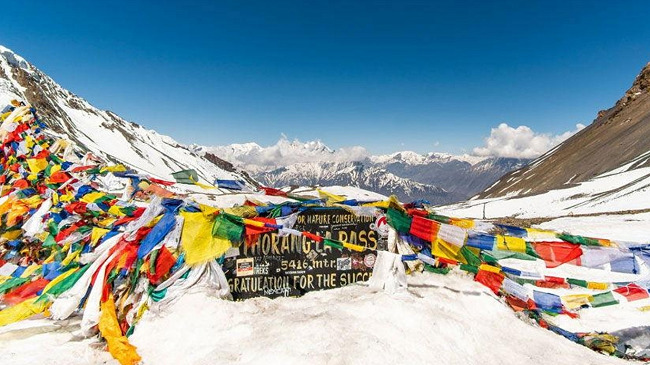
Waterproof trousers are especially useful when crossing Cho La Pass, where snow and ice may be present depending on the season.
4. Trekking Boots & Footwear
Your footwear is one of the most important parts of your gear.
- Waterproof trekking boots with good ankle support
- 3–5 pairs of trekking socks
- 1–2 pairs of warm wool socks
- Lightweight sandals or camp shoes
- Gaiters, Spare shoelaces
- Blister treatment and foot-care supplies
Important: Break in your trekking boots before arriving in Nepal. Avoid starting a long high-altitude trek with brand-new boots.
5. Cho La Pass Specific Gear
Cho La Pass is one of the most demanding sections of the trek, and conditions can vary significantly.
Recommended equipment includes:
- Trekking poles
- Microspikes or light traction devices, when conditions require them
- Gaiters
- Waterproof gloves
- Warm insulated gloves
- Headlamp with spare batteries
- Waterproof backpack cover
- Waterproof dry bags
- Sunglasses/glacier glasses
- High-quality waterproof trekking boots
Note: Depending on current trail and snow conditions, your trekking guide may recommend additional equipment. Technical climbing equipment is generally not required for the standard trekking route, but conditions on Cho La should always be assessed locally.
6. Backpack & Bags
- 30–40 liter daypack
- Duffel bag for your main trekking luggage
- Waterproof backpack cover
- Duffel bag rain cover or waterproof liner
- Several dry bags
- Small waist or hip pouch
- Packing cubes
If porters are included in your package, your main luggage is normally carried for you while you keep your essential items in your daypack.
7. Sleeping & Warmth
Tea houses provide blankets, but carrying your own sleeping bag is highly recommended.
- Four-season sleeping bag suitable for temperatures around -10°C to -15°C or lower
- Sleeping bag liner
- Lightweight travel pillow or inflatable pillow
- Warm nightwear, Earplugs
A warm sleeping bag can make a significant difference, particularly at Gorak Shep, Lobuche, Dzongla, Dragnag, and Gokyo.
8. Water & Hydration
Staying hydrated is extremely important at high altitude.
- 1–2 reusable water bottles
- Hydration bladder
- Water purification tablets
- Water purification drops or filter
- Electrolyte powder
- Insulated bottle, especially for cold conditions
Avoid relying entirely on bottled water. A reusable bottle and purification system can be more practical during a long trek.
9. Personal Medical & First-Aid Kit
Carry a small personal first-aid kit containing:
- Personal prescription medicines
- Basic pain relief medicine
- Bandages
- Blister plasters
- Antiseptic wipes
- Elastic bandage
- Oral rehydration salts
- Basic stomach medicine
- Hand sanitizer
- Personal hygiene supplies
- Any medication recommended by your doctor for high-altitude travel
For a high-altitude trek such as EBC–Cho La–Gokyo, discuss altitude sickness prevention and treatment with a qualified medical professional before your trip.
10. Electronics & Accessories
- Mobile phone
- Camera
- Extra camera batteries
- Power bank
- Universal travel adapter
- Charging cables
- Headlamp
- Spare batteries
- Waterproof phone pouch
- Portable solar charger, optional
Electricity is available at many tea houses, but charging may cost extra and availability can be limited at higher elevations.
11. Toiletries & Personal Hygiene
- Toothbrush and toothpaste
- Biodegradable soap
- Small shampoo
- Wet wipes
- Toilet paper
- Hand sanitizer
- Quick-drying towel
- Deodorant
- Comb
- Personal hygiene products
- Small mirror
- Nail clippers
Pack toiletries in small, lightweight containers to reduce unnecessary weight.
12. Documents & Money
Keep important documents in a waterproof pouch.
- Passport
- Nepal visa
- Travel insurance documents
- Trekking permits, if provided to you
- Emergency contact information
- Copies of important documents
- Credit/debit card
- Nepali cash
- Passport-size photographs, optional
It is advisable to carry sufficient Nepali cash because ATM and card facilities become increasingly limited as you travel deeper into the Everest region.
13. Optional Items
You may also consider bringing:
- Trekking towel
- Book or Kindle
- Playing cards
- Binoculars
- Camera tripod
- Small sewing kit
- Lightweight snacks
- Energy bars
- Chocolate
- Reusable cutlery
- Travel lock
- Trekking umbrella for lower elevations