Everest View Trek Experience breathtaking views of Everest on this short, scenic trek in Nepal. Perfect for beginners & families. View itinerary & cost now. Everest View Trek is a quick introduction to rural Nepal and its gigantic Himalayan profile. It is for those who wish to savor the grandeur of Everest but cannot afford the hard physical strain. However, it is a bit more challenging than other moderate treks in Nepal.
For travelers who dream of standing face-to-face with Mount Everest but don't have the time, altitude tolerance, or endurance for a full expedition, the Everest View Trek is the ideal choice. Often called the Everest Short Trek, this journey offers a taste of the Khumbu region's dramatic landscapes, Sherpa culture, and jaw-dropping mountain panoramas all within a manageable timeframe of about 6 to 8 days.
Unlike the Classic Everest Base Camp Trek, which demands two weeks of high-altitude walking, the Everest View Trek is designed for those with limited time, families, older trekkers, or first-timers testing their fitness before attempting something bigger. The trail follows a similar route out of Lukla, passing through Phakding and the vibrant trading town of Namche Bazaar, before reaching Everest View Hotel or Khumjung village, both offering some of the most spectacular direct views of Everest, Lhotse, and Ama Dablam without the need to trek all the way to Base Camp itself.
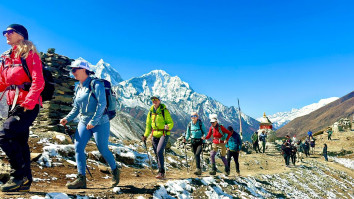
It's a trip that captures the essence of Trekking in Nepal, buddhist monasteries draped in prayer flags, suspension bridges swaying over glacial rivers, yak caravans on narrow mountain paths, and warm hospitality from Sherpa communities who have called this region home for centuries.
While the Everest View Trek is perfect for shorter holidays, Nepal's Khumbu region has options for every kind of adventurer:
The iconic 15 days journey to the foot of the world's highest mountain, passing through Tengboche, Dingboche, and Gorak Shep.
A challenging circuit crossing Kongma La, Cho La, and Renjo La passes, ideal for experienced trekkers seeking solitude and raw mountain wilderness.
A stunning alternative route featuring turquoise glacial lakes and views from Gokyo Ri, often combined with Everest Base Camp for a complete Khumbu experience.
The same legendary trail, but with comfortable lodges, private rooms, and better meals for trekkers who want adventure without sacrificing comfort.
For serious mountaineers aiming to summit Everest itself, requiring months of preparation, permits, and professional support.
Whichever route you choose, all of these treks pass through the same gateway towns and share the same Himalayan magic that makes the Everest Region Trekking, which is world famous Trekking Destination.
No trek in this region is complete without an experienced Sherpa Trekking Guide. Sherpas aren't just guides; they're mountain experts who understand altitude, weather patterns, and the terrain better than anyone. A knowledgeable trekking guide ensures your safety, helps you acclimatize properly, and enriches the journey with cultural insight and local stories you simply won't find in a guidebook. For treks like the Everest View Trek or the longer Everest Base Camp Trek, having the right guide can make the difference between an average trip and an unforgettable one.
Planning treks and tours in Nepal can be overwhelming, from permits and flights to Lukla, to choosing the right itinerary for your fitness level. Working with a trusted local travel agency in Kathmandu, such as Nepal Unique Treks, takes the stress out of the process. Local agencies offer:
Booking locally also means your money supports Nepali communities directly, rather than passing through international middlemen.
The Everest View Trek is proof that you don't need weeks of trekking to experience the magic of the Himalayas. Whether you're drawn to a short escape, a full Everest Base Camp adventure, the high-altitude challenge of the Three High Pass Trek, the serene beauty of Gokyo Lake, or even a luxury version of the classic trail, Nepal has a route suited to your goals. With the guidance of skilled Sherpa guides and the support of a reliable local agency, your journey into the shadow of the world's highest peak can be as safe as it is unforgettable.
Timing your trek right can make the difference between clear mountain panoramas and days of frustrating cloud cover. The Khumbu region has two prime trekking seasons:
This is one of the most popular times to trek. Days are warmer, skies are generally clear in the mornings, and the hillsides come alive with blooming rhododendrons. It's also the season when Everest expedition teams gather at Base Camp, adding an extra layer of excitement to the trail.
Widely considered the best season overall. Post-monsoon skies are crisp and clear, offering some of the most reliable mountain views of the year. Temperatures are comfortable during the day and cold at night, and the trails are busy with trekkers from around the world, creating a lively atmosphere in teahouses along the route.
Possible for the Everest View Trek since it doesn't go as high as Base Camp, but expect very cold temperatures, especially at night, and a chance of snowfall blocking trails or delaying flights to Lukla. Good for those who prefer quieter trails and don't mind the cold.
Generally not recommended. Heavy rainfall causes slippery trails, leech encounters at lower elevations, and frequent cloud cover that blocks mountain views. Flight delays to and from Lukla are also more common during this period.
For most trekkers, late September to early December and March to May offer the best combination of good weather, clear views, and manageable trail conditions.
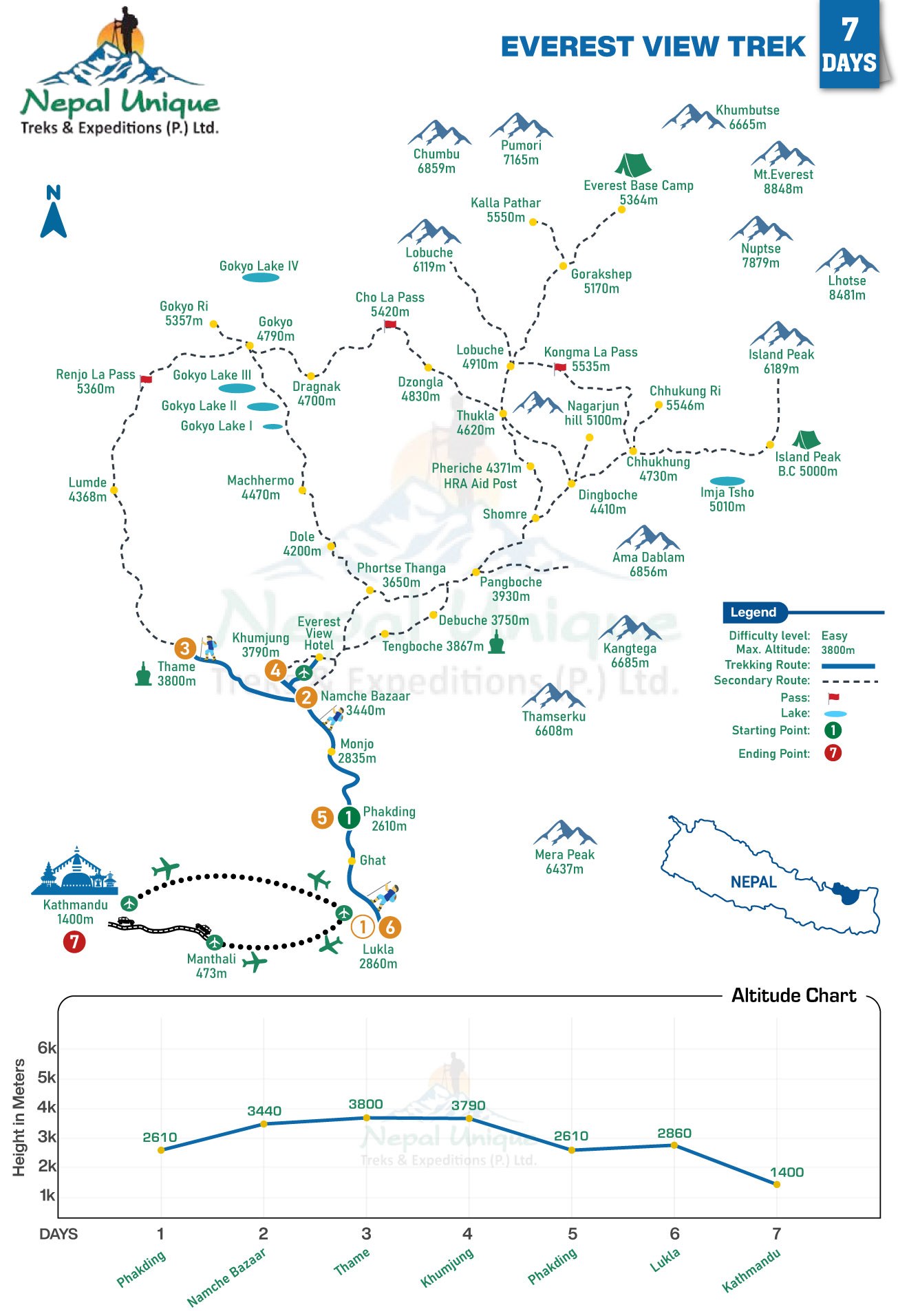
The adventure begins with an early morning drive from Kathmandu to Ramechhap, It will take five hours and 30 m, 138 km. Secnic flight from Ramechhap to Lukla, landing at the famous Tenzing-Hillary Airport. From here, the trail winds gently downhill through pine forests and small Sherpa settlements along the Dudh Koshi River, leading to the peaceful village of Phakding, where you'll spend your first night on the trail.
Today's trek is longer and more demanding, crossing several suspension bridges over the Dudh Koshi River before entering Sagarmatha National Park. The trail climbs steadily uphill, and if the skies are clear, you'll catch your first glimpse of Mount Everest along the way. Namche Bazaar, the bustling Sherpa capital of the Khumbu region, is a lively town full of bakeries, gear shops, and teahouses a great place to rest and acclimatize.
Leaving the busier main trail behind, today's route heads toward the quiet and culturally rich village of Thame, birthplace of several famous Everest summiteers, including Tenzing Norgay's family roots. The trail offers a more authentic, off-the-beaten-path experience with fewer crowds, passing traditional Sherpa homes, chortens, and mani walls along the way.
Today's walk connects two of the Khumbu's most culturally significant villages. Khumjung is home to the historic Khumjung Monastery and offers superb close-up views of Ama Dablam and the surrounding peaks. This is also a great area to explore Sherpa culture, local schools, and traditional stone-walled homes.
With acclimatization complete, today marks the beginning of the return journey. The long descent retraces much of the route back through Namche Bazaar and down toward Phakding, offering one last chance to soak in the mountain views before dropping back into the lower valley.
The final trekking day is a relatively short and gentle walk back to Lukla, following the Dudh Koshi River one last time. Arriving in Lukla gives you time to relax, reflect on the journey, and celebrate the completion of the trek with your guide and porter team.
The trip concludes with a short flight from Lukla to Ramechhap's Manthali Airport (commonly used during peak trekking seasons instead of Kathmandu), followed by a scenic 5 hour drive back to Kathmandu, marking the end of an unforgettable Himalayan journey.
One of the pleasant surprises for first-time trekkers is how comfortable teahouse trekking in the Everest region can be.
Along the route, you'll stay in teahouses (basic mountain lodges) in villages like Phakding, Namche Bazaar, and Khumjung. Rooms are typically simple, with twin beds, blankets, and shared bathrooms, though Namche Bazaar has some lodges with attached bathrooms and even hot showers for an extra fee. Higher up, facilities become more basic, and nights get colder, so a good sleeping bag is recommended. For those wanting more comfort, an Everest Base Camp Luxury Trek style itinerary can be adapted for the shorter route too, with upgraded lodges offering private rooms, better heating, and improved meals.
Teahouse menus are surprisingly varied, though prices increase as you climb higher due to the cost of transporting supplies by porter or yak. Typical options include:
Vegetarian food is recommended at higher elevations, as meat is carried up for days without refrigeration. Bottled water is available but expensive and environmentally unfriendly; most trekkers prefer to purify water using tablets or a filter instead.
Upon arrival at Tribhuvan International Airport in Kathmandu, most trekking packages include airport pickup, where a representative from your travel agency will transfer you directly to your hotel. This is usually arranged in advance by your local travel agency in Kathmandu, so look for your name on a signboard at the arrivals area.
The trek typically begins with a short but thrilling domestic flight from Ramechhap to Lukla's Tenzing-Hillary Airport, one of the most famous mountain airstrips in the world. The flight takes around 25-30 minutes and offers incredible aerial views of the foothills and snow-capped peaks.
Flights are weather-dependent and can be delayed or rerouted, especially in the morning fog of autumn and winter
During peak season or bad weather, flights are mostly routed through Manthali Airport in Ramechhap, requiring an additional 4-5 hour drive from Kathmandu
It's wise to build 1-2 buffer days into your itinerary in case of flight delays
After completing the trek, you'll fly back from Lukla to Manthali, depending on the season), where your agency will typically arrange transportation back to your hotel.
Working with an experienced trekking guide and travel agency helps manage these logistics smoothly, so you can focus on enjoying the trek rather than worrying about flight schedules or accommodation bookings.
Even though the Everest View Trek doesn't climb as high as Everest Base Camp, it still reaches elevations above 3,800 meters (Namche Bazaar sits at 3,440m, and Everest View Hotel is around 3,880m). At this height, altitude sickness is a real possibility, and understanding it properly is essential for a safe and enjoyable journey.
Altitude sickness, or Acute Mountain Sickness (AMS), occurs when the body doesn't get enough time to adjust to lower oxygen levels at higher elevations. It can affect anyone, regardless of age or fitness level, and doesn't discriminate between seasoned athletes and casual walkers.
Mild symptoms are common and usually manageable, but they should never be ignored, as they can progress to more serious conditions like High Altitude Pulmonary Edema (HAPE) or High Altitude Cerebral Edema (HACE) if a trekker continues ascending without proper acclimatization.
Most well-planned itineraries include a rest day in Namche Bazaar, which allows the body to adjust before continuing higher. Even on rest days, light walking (like a hike up to Everest View Hotel or Khumjung) helps the body adapt faster than complete inactivity the old mountaineering rule is "climb high, sleep low."
Drinking plenty of water (3-4 liters a day) helps counter the dehydrating effects of altitude and dry mountain air. Herbal teas and garlic soup, a local remedy believed to help with acclimatization, are also popular among trekkers.
Avoid gaining elevation too quickly. A gradual pace gives your body time to produce more red blood cells and adjust to lower oxygen levels naturally.
Both can worsen symptoms of altitude sickness by affecting breathing and hydration levels, so it's best to avoid them until you're back at lower elevations.
Never ignore symptoms in hopes they'll pass on their own. If headaches or nausea persist or worsen, it's important to rest, avoid further ascent, and descend if symptoms don't improve.
A knowledgeable Sherpa guide or trekking guide is trained to recognize early signs of AMS and knows when it's necessary to slow down, rest an extra day, or arrange a descent. This is one of the most valuable safety nets you can have on any Himalayan trek, and it's a major reason why trekking with a reputable local travel agency in Kathmandu is strongly recommended over trekking solo.
Since emergency evacuation (often by helicopter) can be costly, comprehensive travel insurance that covers high-altitude trekking and emergency rescue is essential for anyone heading into the Khumbu region.
The good news is that because the Everest View Trek stays at a lower altitude than routes like Everest Base Camp or the Everest Three High Pass Trek, the risk of severe altitude sickness is significantly reduced. Still, proper preparation, a sensible pace, and traveling with an experienced team make all the difference between a comfortable journey and a preventable health issue.
With the right planning, awareness, and guidance, trekkers of nearly all fitness levels can safely enjoy the incredible views and cultural richness the Everest region has to offer.
Packing right can make or break your trekking experience. The weather in the Khumbu region can shift quickly, so it's important to be prepared for everything from warm sunny afternoons to freezing nights. Here's a complete, practical gear list to help you prepare for your journey.
Find answers to the most frequently asked questions about this tour.
The Everest View Trek is considered easy to moderate, making it suitable for beginners, families, and trekkers with limited time. Unlike the more demanding Everest Base Camp Trek or the strenuous Everest Three High Pass Trek, this route involves shorter walking days and doesn't require prior high-altitude trekking experience though a reasonable level of fitness is still recommended.
Most itineraries range from 6 to 8 days, including flights to and from Lukla. This makes it a great option for travelers who want to experience the Everest region without committing to the two-week timeframe needed for a full Everest Base Camp Trek.
No prior experience is necessary. Basic fitness and the ability to walk 4-6 hours a day on uneven terrain are enough. That said, some pre-trip walking or hiking practice will make the experience more enjoyable.
While independent trekking is possible, hiring a licensed Sherpa guide and porter is highly recommended, especially for first-time visitors. A trekking guide helps navigate the trail, manages altitude-related concerns, and offers valuable cultural insight, while a porter carries your heavier luggage so you can enjoy the trek without physical strain.
Yes, it's one of the most family friendly treks in the region due to its lower altitude and shorter duration compared to Everest Base Camp Trek. That said, a doctor's consultation is advisable for very young children, older trekkers, or anyone with pre-existing health conditions.
Trekkers need a Sagarmatha National Park entry permit and a local Khumbu Pasang Lhamu Rural Municipality entry permit. A local travel agency in Kathmandu can arrange these permits in advance, saving time and hassle upon arrival.
Yes. Many trekkers combine the Everest View Trek with a visit to the Everest Base Camp Trek, Gokyo Lake Trek, or even extend it into a full Everest Expedition Nepal itinerary if they wish to explore further into the region. It's also easy to upgrade the itinerary into an Everest Base Camp Luxury Trek style experience with better lodges and services.
Spring (March to May) and autumn (September to November) offer the clearest skies and most stable weather, making them the best seasons for mountain views and comfortable trekking conditions.
Since the trek reaches around 3,880 meters at its highest point, mild altitude symptoms are possible, though generally much less risky compared to higher treks like Everest Base Camp or the Three High Pass Trek. Proper acclimatization, hydration, and a gradual pace significantly reduce the risk.
Trekkers stay in teahouses along the trail, which offer basic but comfortable rooms with shared bathrooms in most places. Namche Bazaar has more upscale options for those wanting extra comfort.
Most teahouses offer Wi-Fi for a small fee, and Nepali SIM cards with data plans generally work in lower elevation villages like Namche Bazaar and Khumjung, though connectivity can be unreliable higher up.
The trek usually begins with a short domestic flight from Kathmandu to Lukla. Airport transfers, both international and domestic, are typically arranged by your trekking agency as part of the package.
A good trekking gear list includes layered clothing, a warm sleeping bag, sturdy trekking boots, and basic health essentials. Many local agencies also offer gear rental services in Kathmandu for items like down jackets and sleeping bags.
Booking through a local travel agency in Kathmandu, such as Nepal Unique Treks, ensures proper permits, experienced guides, fair pricing, and reliable on-ground support all of which contribute to a safer and smoother trekking experience. It also means your trip directly supports local communities and Sherpa livelihoods.
Yes. Even for shorter, lower and altitude treks like the Everest View Trek, travel insurance covering trekking activities and emergency evacuation is strongly recommended in case of unexpected illness, injury, or flight delays.
Nepal 
Nepal
Nepal
Nepal
Nepal

(51) Reviews
.jpg)
.jpg)
 WhatsApp
 Plan Your Trip




 Reviews 5/5
 Reviews 5/5
 Reviews 5/5