 WhatsApp
 Plan Your Trip
Introduction: Lumbini - The Birthplace of Lord Buddha
In the flat green plains of southern Nepal, close to the Indian border, stands a quiet garden where, more than 2,500 years ago, Queen Maya Devi gave birth to Prince Siddhartha Gautama, the future Buddha. That place is Lumbini. Today it is a UNESCO World Heritage Site (inscribed in 1997) and one of the four great pilgrimage places of Buddhism, alongside Bodh Gaya (enlightenment), Sarnath (first sermon) and Kushinagar (parinirvana).
For anyone planning a Lumbini Nepal Buddhist spiritual journey, the first surprise is how peaceful the site feels. Pilgrims walk barefoot beneath old trees, monks chant at the sacred pond, and the ruins of the earliest shrines sit beside modern monasteries built by Buddhist communities from around the world.
For Vietnamese Buddhists, Lumbini holds a special place. The Buddha's teachings have shaped Vietnamese spiritual life for nearly two thousand years, through Thiền, Tịnh Độ, and the Theravada tradition in the south. Standing where the Buddha was born is, for many devotees, the fulfilment of a lifelong wish.
This guide explains everything a Vietnamese pilgrim or family needs to plan a Buddhist pilgrimage tour in Nepal: the best season, the sacred sites, how to travel from Vietnam, what to expect in Kathmandu and Pokhara, safety, hotels, and a practical 8-day itinerary.
Why Should Vietnamese Buddhists Travel to Lumbini, Nepal?
Standing at the Source
Reading about the Buddha's life is one thing. Walking to the exact spot of his birth is another. At Lumbini, history and devotion meet: an Ashokan inscription records the site, archaeologists have identified a marker stone within the Maya Devi Temple, and the surrounding landscape is protected as a sacred zone.
Recommended Trips
Trips You May Like
Hand-picked Nepal trips related to this article.

A Place for Meditation and Quiet Practice
The Lumbini Sacred Garden covers a large area of lawns, canals and woodland. Many pilgrims chant, circumambulate and sit in meditation beneath the Bodhi trees. Several monasteries welcome visitors to join short sessions or sit quietly in their halls.
The International Monastic Zone
Lumbini's monastic zone is one of the few places in the world where Buddhist traditions from many countries stand side by side. Vietnamese visitors can see Theravada, Mahayana and Vajrayana architecture within a short walk, which makes the visit as educational as it is devotional.
Vietnamese Connections to Lumbini
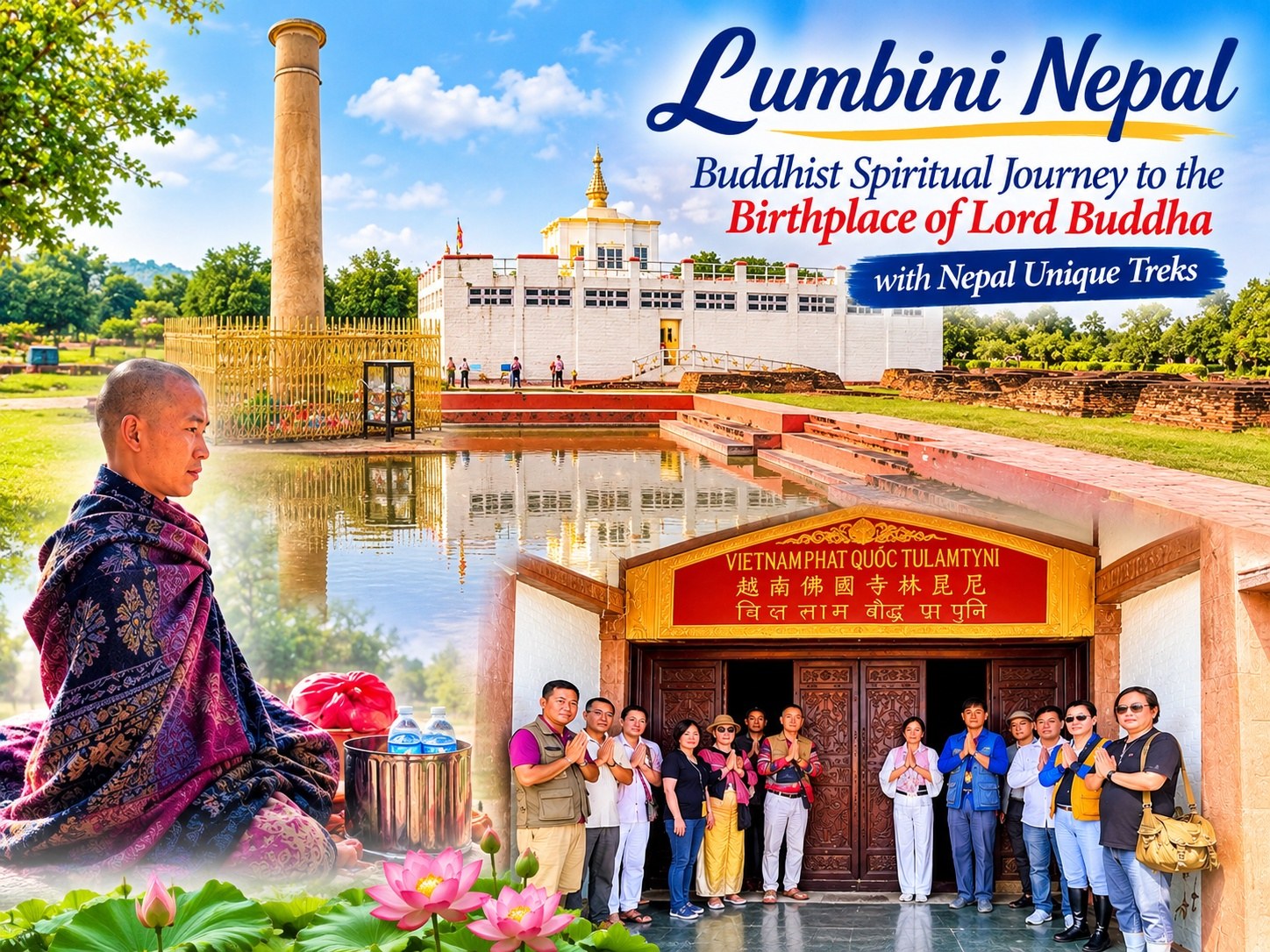
Vietnam is represented in the monastic zone by its own temple, the Vietnamese Buddhist Monastery in Lumbini (commonly known as Vietnam Phat Quoc Tu). For Vietnamese groups it often becomes a gathering point for prayer, chanting and a shared meal. Many Vietnamese Buddhist communities, associations and temples organise annual pilgrimages to Nepal, and the sight of Vietnamese pilgrims in the Sacred Garden is now familiar to local guides.
A Pilgrimage Combined with Himalayan Nepal
Nepal also offers some of the most beautiful Buddhist landscapes in Asia. Pilgrims can combine Lumbini with the great stupas of Kathmandu and the lakeside calm of Pokhara, a combination often called the Nepal Buddhist Circuit Tour.
When Is the Best Time to Visit Lumbini?
Nepal has four seasons, and Lumbini sits in the low-lying Terai region, so its climate is warmer than Kathmandu or Pokhara.
Spring (March and May)
Spring is warm and green, but temperatures in Lumbini rise quickly. April and May can be very hot, often above 35°C. Visits are possible with early-morning sightseeing and plenty of water. This season includes Buddha Jayanti.
Summer and Monsoon (June and August)
This is the hottest and wettest period. Heavy rain can affect roads and some flights, particularly in the hills between Pokhara and Lumbini. It is generally the least comfortable time for elderly pilgrims.
Autumn (September and November)
Autumn is the most popular season. Skies clear after the monsoon, the landscape is lush, and the mountains are visible from Pokhara. October and November are especially pleasant.
Winter (December and February)
Days are mild and comfortable for sightseeing, but mornings and evenings in Lumbini can be cool, and fog sometimes delays flights to Bhairahawa in December and January. Kathmandu and Pokhara are cold at night, so bring warm layers.
Buddha Jayanti (Buddha Purnima)
Buddha Jayanti commemorates the birth, enlightenment and passing of the Buddha. In Nepal it falls on the full-moon day of the Nepali month of Baisakh, usually in late April or May. Lumbini hosts prayers, processions and offerings, and large numbers of pilgrims attend. If you plan to travel then, book flights and hotels well in advance, and confirm the exact date with the Lumbini Development Trust or Nepal Tourism Board.
Our recommendation: October to March is the most comfortable window for a Lumbini pilgrimage, especially for seniors and families.
Most Important Buddhist Spiritual Places to Visit in Lumbini
Maya Devi Temple
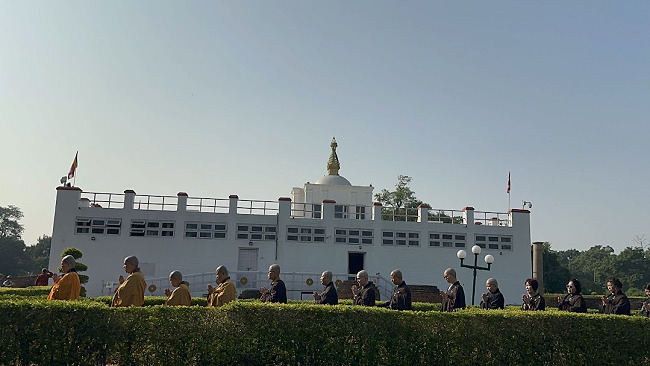
The Maya Devi Temple is the spiritual heart of Lumbini. It stands over the traditionally accepted birthplace of the Buddha, marked by a stone identified during archaeological work. Inside the protected building, visitors walk on raised pathways above the excavated brick foundations of earlier shrines. Photography is usually restricted inside, and silence is expected. Allow time to sit quietly outside afterwards.
Ashoka Pillar
Beside the temple stands the Ashoka Pillar, erected by Emperor Ashoka of the Maurya dynasty, who visited Lumbini in the third century BCE. Its inscription in Brahmi script records that the Buddha was born here and that the village was granted tax relief. It is one of the most important pieces of evidence identifying Lumbini as the Buddha's birthplace.
Sacred Garden
The Sacred Garden is the protected zone around the Maya Devi Temple, with ruins of ancient monasteries and stupas, mature trees and walking paths. Its calm, open setting is ideal for walking meditation or quiet reflection.
Puskarini Sacred Pond
According to Buddhist tradition, Queen Maya Devi bathed in this pond before giving birth, and the infant Prince was bathed here as well. The pond, with its steps, birds and reflections of the temple, is among the most photographed and most peaceful spots in Lumbini.
Vietnamese Buddhist Monastery in Lumbini
In the monastic zone, Vietnamese visitors can visit the Vietnamese monastery, a place of worship that reflects Vietnamese Buddhist architecture. Visit hours and the possibility of joining chanting or meals should be confirmed in advance through your tour operator, because monastery access can vary by season and events.
International Monastic Zone
The monastic zone, set out in the Lumbini Master Plan, is divided into two sides by a canal. The eastern side generally houses Theravada monasteries, and the western side Mahayana and Vajrayana ones. Temples built by Thailand, Myanmar, Cambodia, China, Japan, Germany, France, Korea, Tibet and others reflect the styles of their home countries. Plan half a day to see the highlights, and remember that distances are long, so many visitors use bicycles, rickshaws or electric carts.
World Peace Pagoda (Lumbini)
The white World Peace Pagoda in Lumbini, built by Japanese Buddhists, is a quiet place for evening reflection beside a pond and gardens.
Lumbini Museum and Research Institute
The Lumbini Museum displays archaeological finds, coins, terracotta and manuscripts from Lumbini and the surrounding region, helping visitors place the Buddha's life in its historical setting. Opening days and hours can change, so check locally.
Tilaurakot and Ancient Kapilvastu
Tilaurakot, roughly 25–30 km west of Lumbini, is widely identified as the ancient capital of the Shakya kingdom, where Prince Siddhartha grew up before renouncing royal life. Visitors can see brick city gates, fortification walls and the remains of palaces and stupas. It is a powerful complement to Lumbini because it shows where the Buddha lived, not only where he was born.
Other Important Archaeological Buddhist Sites Nearby
- Gotihawa: traditionally linked to Kakusandha (Krakuchchhanda) Buddha, with an Ashokan pillar stump and stupa.
- Niglihawa: associated with Kanakamuni (Konagamana) Buddha, with a broken Ashokan pillar.
- Ramagrama Stupa: according to tradition, the only stupa that preserved a portion of the Buddha's relics undisturbed.
- Devdaha: connected with the maternal home of Maya Devi and Prince Siddhartha's mother's family.
Most of these sites can be visited as a half-day or full-day excursion from Lumbini with a local guide and private vehicle.
Can We Meet Vietnamese Monk Thay Minh Tue in Nepal?
This is one of the questions Vietnamese travellers ask most. The honest answer is that we cannot promise it, and we think it would be wrong to try.
Why Vietnamese Travellers Are Interested
Thầy Thích Minh Tuệ became widely known in Vietnam in 2024 for his strict dhutanga (ascetic) practice: walking barefoot, living simply and receiving only the food he was offered. Many people were moved by his humility and plain way of living. In December 2024, he left Vietnam on foot with a small group of companions, with the stated aim of visiting Buddhist holy sites in India and Nepal. His journey has been followed closely by Vietnamese communities around the world, and, like many public figures, it has also drawn debate.
What We Can and Cannot Say
Based on the most recent public reports we could find (late September 2026), supporter communities describe him as having spent about a year in Nepal. We have not found an official statement confirming where he is staying now, and we deliberately do not name any location. Monks on long pilgrimages move, change plans, and may choose not to receive visitors at all.
Please note:
- We cannot guarantee that you will meet him, see him, or be received by him.
- We will not organise visits to places where he or his companions are practising privately.
- His movements and availability may change at any time, and we do not publish information we cannot verify.
Visiting Respectfully
If you hope to honour his journey, the best way is to treat your trip as your own pilgrimage. Visit the places he walked to, practise your own meditation, and make offerings in the monasteries open to visitors. If you happen to encounter him or his companions, please follow normal monastic etiquette: keep your distance, do not photograph or livestream without permission, do not crowd or follow, and accept it gracefully if the monks decline to meet.
Before every departure, our team checks the latest publicly confirmed information and tells our groups what is and is not known.
How to Travel from Vietnam to Lumbini, Nepal?
International Flights from Vietnam to Kathmandu
At the time of writing, we could not confirm a regular scheduled non-stop flight between Vietnam and Kathmandu. Most itineraries use one connection. Airlines that commonly connect Hanoi, Ho Chi Minh City or Da Nang with Kathmandu include Thai Airways, Singapore Airlines, Malaysia Airlines, Air India, IndiGo, Cathay Pacific, China Southern, China Eastern and Qatar Airways. Schedules change, so always check with your airline or travel agent before booking.
Common Transit Airports
Route | Typical transit points |
Hanoi to Kathmandu | Bangkok, Kuala Lumpur, Guangzhou, Kunming, Delhi |
Ho Chi Minh City to Kathmandu | Bangkok, Singapore, Kuala Lumpur, Delhi |
Da Nang to Kathmandu | Usually via Hanoi, Ho Chi Minh City or Bangkok first |
Total travel time is typically around 7 to 14 hours depending on the connection. Allow a comfortable layover, especially for seniors and groups.
Nepal Visa for Vietnamese Citizens
Vietnamese passport holders can generally obtain a tourist visa on arrival at Tribhuvan International Airport and at land border points, and Nepal's Department of Immigration encourages travellers to complete the online form before arrival to save time. Typical requirements include a passport valid for at least six months, a passport photo, and the visa fee, usually payable in cash in US dollars.
Fees depend on the length of stay (15, 30 or 90 days).
Important: Visa rules and fees change. Some online sources disagree with each other, so please confirm the current policy with the Nepal Department of Immigration (immigration.gov.np) or the Nepal embassy before you travel.
Arrival at Tribhuvan International Airport (Kathmandu)
After landing, follow signs for visa processing, then immigration, baggage claim and customs. Our representative meets groups outside the arrival hall with a name sign, and the hotel transfer typically takes 20 to 45 minutes depending on traffic.
Kathmandu to Lumbini by Domestic Flight
The quickest way is a domestic flight from Kathmandu to Gautam Buddha International Airport in Bhairahawa, roughly 30 to 35 minutes. Several domestic airlines serve the route with multiple daily flights, though schedules change by season and weather. From Bhairahawa, Lumbini is about 20 to 25 km away, a 30 to 45 minute drive.
Kathmandu to Lumbini by Private Vehicle
By road, the journey is usually 7 to 9 hours (about 270 km) depending on traffic, road works and stops. A private vehicle with an experienced driver allows rest breaks, which is important for seniors. Many groups prefer to fly one way and drive one way to enjoy the countryside.
Pokhara to Lumbini
Pokhara to Lumbini is around 5 to 6 hours by private vehicle via the Siddhartha Highway through Tansen and Butwal, a scenic route that can be slower during monsoon.
Buddhist Spiritual Places to Visit in Kathmandu
Boudhanath Stupa
Boudhanath is among the largest spherical stupas in the world and a UNESCO World Heritage Site. Its white dome, gilded tower and painted eyes of wisdom look over a bustling square filled with Tibetan monasteries, butter-lamp halls and prayer-wheel lanes. Pilgrims walk the circle (kora) clockwise, spin the prayer wheels, and light butter lamps. For Vietnamese visitors, it is a good introduction to Himalayan Buddhism, and it is especially atmospheric at dawn and in the evening.
Swayambhunath Stupa
Swayambhunath, often called the Monkey Temple, sits on a hilltop west of the city, and is also a UNESCO World Heritage Site. It is one of the oldest and most sacred Buddhist sites in Nepal, with a stupa, shrines and sweeping views of the Kathmandu Valley. Climb the stone stairway slowly, and keep belongings secure around the resident monkeys.
Kopan Monastery
Kopan Monastery, on a hill north of Boudhanath, is a Tibetan Buddhist monastery of the Gelug tradition, known internationally for its meditation courses and welcoming approach to visitors. Many pilgrims enjoy the garden, the gompa and the view over the valley. Visiting hours and any teachings should be checked in advance.
Namo Buddha Monastery (Optional Extended Excursion)
About 40 km southeast of Kathmandu, Namo Buddha is associated with the Jataka story in which a prince offered his body to a starving tigress and her cubs, a story of compassion beloved by Buddhists everywhere. A large Tibetan monastery stands on the hill, and the quiet countryside setting makes it a good half-day excursion for those with extra time.
Buddhist and Cultural Attractions to Visit in Pokhara
Pokhara is a lakeside city with views of the Annapurna range. It is a relaxing stop between Kathmandu and Lumbini and adds natural beauty to a pilgrimage.
World Peace Pagoda (Pokhara)
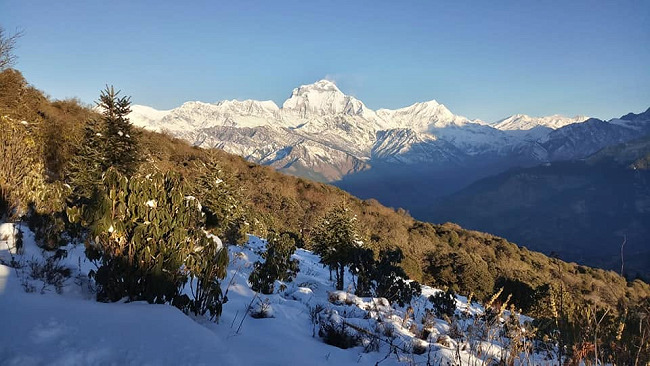
The white World Peace Pagoda (Shanti Stupa), built on a hilltop above Phewa Lake, offers sunrise views over the Annapurna and Machhapuchhre peaks. Visitors can drive part of the way and walk the final path or take a boat across the lake and hike up.
Jangchub Choeling Monastery
This is a Tibetan Buddhist monastery in Pokhara, home to monks who study and chant daily. Visitors can enter the prayer hall quietly and observe, with permission.
Matepani Gumba
Matepani Gumba is a peaceful Tibetan Buddhist monastery with a prayer hall and views, ideal for those who want a quieter experience than the lakeside.
Phewa Lake
A gentle boat ride on Phewa Lake, ideally in the morning, offers views of the Himalaya reflected in the water and gives pilgrims a restful break between temple visits.
Tal Barahi Temple
Tal Barahi is a Hindu temple on a small island in Phewa Lake, dedicated to the Barahi form of the goddess Shakti. Nepal's religious life is a blend of Buddhist and Hindu traditions, and visiting it gives travellers a sense of how both faiths coexist in daily life.
International Mountain Museum
The International Mountain Museum tells the story of the Himalaya through exhibits on mountaineering, geology, wildlife and the cultures of mountain communities. It is a good rainy-day or afternoon option, especially for families.
Is Nepal Safe for Vietnamese Tourists and Buddhist Pilgrims?
Nepal welcomes millions of visitors and has a long tradition of hosting pilgrims. Pilgrimage routes are generally calm, and Nepali people are widely known for their hospitality. Like any destination, it rewards good preparation.
General Travel Safety
Violent crime against tourists is uncommon. The most frequent problems are petty theft in crowded places, overcharging, and traffic. Keep valuables in your hotel safe, agree prices before taxis, and stay with your group at night. Check your government's travel advice and the Nepal Tourism Board before departure, because conditions, strikes and local restrictions can change.
Safety for Senior Citizens and Families
Many of our pilgrims are over 60. The main sites in Lumbini are flat and accessible, and the Maya Devi Temple area has paved paths. Kathmandu's stupas involve steps and uneven ground, and the World Peace Pagoda in Pokhara requires a short hill walk. A good itinerary offers rest breaks, private vehicles, wheelchair or walking support where possible, and flexibility on days when someone is tired. Families with children should keep a close eye on traffic and heat.
Local Transportation and Road Conditions
Roads in Nepal can be narrow, winding and slower than the distance suggests, especially in hills during monsoon, when landslides can delay travel. Use a licensed private vehicle with an experienced driver, avoid night driving, and build buffer time into flight connections. Domestic flights can be delayed by weather, particularly fog in winter and cloud in monsoon.
Health and Travel Insurance
We strongly recommend comprehensive travel insurance covering medical care, evacuation, delays and cancellations. Drink bottled or treated water, eat freshly cooked food, and carry any regular medicines in their original packaging. Lumbini can be very hot from April to June, so bring sun protection and drink plenty of water. Consult your doctor about vaccinations well before departure.
Religious and Cultural Customs
- Dress modestly with shoulders and knees covered in temples and monasteries.
- Remove shoes before entering prayer halls.
- Walk clockwise around stupas and prayer wheels.
- Do not point your feet at altars or monks, and do not touch sacred objects without permission.
- Ask before photographing people or inside shrines, and respect no-photo signs.
- Keep voices low in meditation areas.
Weather-Related Precaution
Avoid peak heat (April to June) and heavy monsoon (July to August) if possible. Winter mornings may be foggy, which can affect flights. Flash floods and landslides are a real risk in some parts of Nepal during monsoon, so check forecasts and advisories before travel.
Why Travel with a Professional Local Tour Operator
A licensed local operator knows current road and flight conditions, can adjust plans quickly, arranges hotels, vegetarian meals and transport, and provides a guide who can explain the history and etiquette of each site. For senior travellers and groups, this support makes a real difference.
Accommodation Options in Nepal: Luxury, Standard and Budget
Nepal offers options for every budget. Below is an overview by destination. Availability and prices vary by season, so we confirm hotels at booking.
Luxury 4-Star and 5-Star Hotels
Kathmandu and Pokhara have a range of upscale hotels with spacious rooms, good restaurants, spas and airport pick-ups. Lumbini has a smaller selection, including a few comfortable upscale hotels and resorts close to the Sacred Garden. Luxury hotels suit pilgrims who want maximum comfort and quiet.
Comfortable 3-Star Tourist Hotels
Three-star hotels are the most popular choice for pilgrimage groups: clean, air-conditioned rooms, a restaurant and helpful staff, often in convenient locations near the main sites. In Kathmandu, many are within a short drive of Boudhanath. In Pokhara, they cluster around Lakeside. In Lumbini, several sit near the monastic zone.
Budget Hotels and Guesthouses
Budget hotels and guesthouses offer simple but clean accommodation. They suit younger travellers and groups on a limited budget. Facilities vary, so we check them in advance, particularly for hot water, air-conditioning in Lumbini, and accessibility.
Group Accommodation
For large groups, we reserve blocks of rooms in one hotel so the group stays together. Some monasteries and guest houses also offer simple lodging, though availability depends on their rules and the season. We can advise on options for Buddhist associations and temple groups.
Vegetarian Food Arrangements
Nepal has a strong vegetarian tradition, and vegetarian food is easy to find. We can arrange fully vegetarian menus for the whole trip, including Vietnamese-style vegetarian dishes where restaurants can prepare them, and plan meal stops to suit your group's timing. Please tell us about dietary needs at booking, including chay (strict vegetarian), vegan, or allergy requirements.
Private Rooms and Twin-Sharing
Most hotels offer single, double and twin rooms. Twin-sharing is the standard for groups and keeps costs down, while private single rooms are available at a supplement. Please tell us your preferences when booking.
Suggested 8-Day Nepal Buddhist Spiritual Journey Itinerary
This itinerary combines Kathmandu, Pokhara and Lumbini in a comfortable pace. It can be customised to your group size, budget, travel dates and interests. Times are approximate and depend on traffic, weather and flight schedules.
Day 1: Arrival in Kathmandu, Nepal
Arrive at Tribhuvan International Airport, where our representative meets you and transfers you to your hotel (about 20–45 minutes). Rest, then enjoy a short evening walk or a quiet dinner. Overnight: Kathmandu.
Day 2: Kathmandu Buddhist Pilgrimage – Boudhanath, Swayambhunath and Kopan Monastery
Begin at Boudhanath at dawn, walking the kora with local pilgrims. After breakfast, visit Kopan Monastery and enjoy the views, then Swayambhunath in the afternoon. Return to the hotel for rest. Overnight: Kathmandu.
Day 3: Kathmandu to Pokhara by Flight or Private Vehicle
Fly from Kathmandu to Pokhara (about 25–35 minutes) or drive (about 6–8 hours). Check into your hotel, then take an easy evening boat ride on Phewa Lake or stroll the lakeside. Overnight: Pokhara.
Day 4: Pokhara Buddhist Sightseeing – World Peace Pagoda, Monasteries and Phewa Lake
Visit the World Peace Pagoda at sunrise for Himalayan views, then Jangchub Choeling and Matepani monasteries. Spend the afternoon at leisure, with an optional visit to Tal Barahi Temple or the International Mountain Museum. Overnight: Pokhara.
Day 5: Pokhara to Lumbini by Private Vehicle
Drive from Pokhara to Lumbini (about 5–6 hours with stops), passing through hill towns and the plains of the Terai. In the late afternoon, visit the Lumbini Sacred Garden at golden hour for a first quiet look. Overnight: Lumbini.
Day 6: Full-Day Lumbini Buddhist Pilgrimage and Monastery Visits
Early in the morning, visit the Maya Devi Temple, Ashoka Pillar and Puskarini Pond before crowds arrive. After lunch, tour the International Monastic Zone, including the Vietnamese Buddhist Monastery, and the Lumbini Museum. In the evening, gather for quiet meditation or chanting. Overnight: Lumbini.
Optional: add a half-day to Tilaurakot (Kapilvastu) and Gotihawa.
Day 7: Lumbini to Kathmandu by Domestic Flight or Private Vehicle
Drive to Bhairahawa (about 30–45 minutes) and fly to Kathmandu (about 30–35 minutes), or travel by road (about 7–9 hours). Spend the evening on souvenir shopping or a farewell dinner. Overnight: Kathmandu.
Day 8: Departure from Kathmandu to Vietnam
Transfer to Tribhuvan International Airport for your flight home, carrying with you the blessings and memories of the pilgrimage.
Customisation options: add Namo Buddha, Tilaurakot, a second Lumbini night, or a Himalayan flight; adjust the pace for senior travellers; or reverse the route to suit flight schedules.
Why Choose Nepal Unique Treks for Your Buddhist Pilgrimage Tour?
Nepal Unique Treks is a Nepal-based tour operator that organises trekking, cultural and religious journeys. For a Buddhist pilgrimage, we focus on comfort, respect and careful planning.
- Customised Buddhist pilgrimage tours: built around your dates, group size and spiritual interests.
- Private and group travel: family trips, temple groups, associations and small private journeys.
- Experienced local guides: guides who know the history, etiquette and practical details of each site.
- Airport transfers and domestic flights: we handle ticketing, transfers and luggage handling.
- Luxury and budget accommodation: hotels matched to your comfort level and budget.
- Vegetarian food arrangements: planned meals and meal stops for the entire route.
- Comfortable private transportation: well-maintained vehicles and experienced drivers.
- Assistance for Vietnamese travellers: help with planning, arrival procedures and on-trip communication.
- Flexible itineraries: adjusted to group size, budget and travel dates.
We are happy to talk through your plans before you commit, including what is and is not possible at each site.
Frequently Asked Questions (FAQs)
Why is Lumbini important for Vietnamese Buddhists?
Lumbini is the birthplace of Siddhartha Gautama, the Buddha, and one of Buddhism's four main pilgrimage sites. For Vietnamese Buddhists, visiting it connects them directly with the origins of the teachings they practise.
How many days are needed to visit Lumbini?
One full day covers the main sites, but two days is more comfortable and allows a visit to Tilaurakot and other nearby sites. A combined Kathmandu to Pokhara and Lumbini tour usually takes 8 to 10 days.
Is there a Vietnamese monastery in Lumbini?
Yes. The Vietnamese Buddhist Monastery in Lumbini is located within the International Monastic Zone. Please confirm visiting hours and any group arrangements through your tour operator before travel.
How can Vietnamese citizens travel to Nepal?
Most travellers fly from Hanoi, Ho Chi Minh City or Da Nang to Kathmandu with one connection, through cities such as Bangkok, Kuala Lumpur, Singapore or Delhi. Check current schedules with airlines or your travel agent.
Do Vietnamese citizens need a Nepal visa?
Vietnamese citizens can generally obtain a tourist visa on arrival, and the online form can be completed in advance. Fees depend on the length of stay and are usually paid in cash in US dollars. Always confirm current rules with the Nepal Department of Immigration before travelling.
Can we meet Thay Minh Tue in Nepal?
We cannot guarantee it, and we do not publish or organise visits to private locations. His movements and availability can change, and we ask pilgrims to respect his privacy and his practice.
Is Nepal suitable for elderly Buddhist pilgrims?
Yes, with good planning. A private vehicle, domestic flights where possible, a comfortable pace, rest breaks, good hotels and travel insurance make the trip suitable for many senior travellers. Please tell us about any health or mobility needs in advance.
Can we arrange vegetarian food?
Yes. We can arrange vegetarian meals throughout the trip, including strict vegetarian and vegan options, and we plan meal stops with your group.
What is the best season for a Lumbini pilgrimage?
October to March is generally the most comfortable period. April to June is hot, and the monsoon (June to August) can disrupt travel. Buddha Jayanti in spring is meaningful but crowded.
Can Nepal Unique Treks organise private Vietnamese Buddhist groups?
Yes. We arrange private tours for temples, Buddhist associations, families and small groups, with itineraries adjusted to group size, budget and dates.
What should I wear when visiting Buddhist sites in Nepal?
Dress mostly, with shoulders and knees covered, and wear shoes that are easy to remove. Carry a light layer for cool mornings and a hat or umbrella for sun.