 WhatsApp
 Plan Your Trip
Upper Mustang Tiji Festival Trek 2027: Dates, Cost, and Everything You Need to Know
Every spring, a hidden desert kingdom in the rain shadow of the Himalayas comes alive with the sound of long horns, cymbals, and drums. Masked monks spin through the dusty courtyard of a 15th-century palace, re-enacting a myth that has protected this land for centuries. This is the Tiji Festival, and in 2027 it returns to Lo Manthang, the walled capital of Upper Mustang, for three unforgettable days.
The Upper Mustang Tiji Festival is one of the last living Tibetan Buddhist festivals still celebrated in its original setting, largely untouched by mass tourism. While Tibet itself has seen many of its traditional festivals restricted or altered, Upper Mustang a former Buddhist kingdom that lies within Nepal's borders but shares Tibet's language, religion, and culture continues to host Tiji exactly as it has been performed for generations. That authenticity is precisely why thousands of trekkers, photographers, and spiritual travelers from around the world plan their entire year around these few days in Lo Manthang.
2026 is shaping up to be an exceptional year to attend. The festival dates fall in mid-May, right in the heart of Upper Mustang's best trekking season, when the region's stark, wind-carved landscape is at its most photogenic under clear blue skies. Because Upper Mustang remains a restricted area with limited permits and a cap on daily visitor numbers, planning early is essential and that is exactly where Nepal Unique Treks comes in.
With years of experience organizing Upper Mustang treks and jeep tours, Nepal Unique Treks handles the restricted area permits, ACAP paperwork, licensed guiding requirements, and logistics of getting travelers safely to 3,840 meters and back. Whether you want to trek the classic route through Kagbeni, Chele, Ghami, and Tsarang, or take a faster jeep tour to maximize your time in Lo Manthang itself, the team designs itineraries that place you in the festival courtyard exactly when the masked dances begin — with acclimatization, cultural context, and comfort built in.
This guide covers everything you need to know before booking your Upper Mustang Tiji Festival Trek 2027: the origins and meaning of the festival, the confirmed 2027 dates, a day-by-day breakdown of the rituals, trek costs, food and accommodation, cultural etiquette, and answers to the most common questions travelers ask. By the end, you'll know exactly what to expect and why so many people say witnessing Tiji Festivel in Lo Manthang is unlike anything else in the Himalayas.
What is the Tiji Festival?
Origin and History of the Tiji Festival in Upper Mustang
The Tiji Festival takes its name from the Tibetan phrase Tempa Chirim, meaning "Prayer for World Peace." It belongs to the Tibetan Buddhist tradition and, more specifically, to the Sakya lineage that has shaped religious life in Upper Mustang for over 600 years. At its core, the festival dramatizes the legend of Dorje Jono, a deity said to be the son of a demon called Man Tam Ru, who threatened the Kingdom of Lo with drought, famine, and destruction. Over three days of ritual dance, Dorje Jono confronts and ultimately subdues his demon father, restoring balance and protecting the land and its people.
Recommended Trips
Trips You May Like
Hand-picked Nepal trips related to this article.
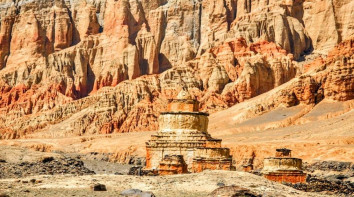
This story is inseparable from the history of the Ancient Kingdom of Lo, the once-independent Buddhist kingdom whose capital, Lo Manthang, still sits behind its original mud-brick walls at the northern edge of Nepal, just a few kilometers from the Tibetan border. Founded in the 14th century, the kingdom flourished as a trade hub on the salt route between Tibet and the Indian subcontinent before becoming part of Nepal. Even today, Lo Manthang retains its own hereditary royal family, its own dialect, and a skyline dominated by whitewashed monasteries and the multi-story Lo Manthang Palace.
Because Upper Mustang was closed to foreign visitors until 1992, it earned its nickname as the "Hidden Kingdom of Nepal" a place where Tibetan Buddhist traditions, largely disrupted elsewhere, continued uninterrupted. The Tiji Festival is performed by monks of the Choede Monastery, the principal Sakya monastery in Lo Manthang, following rituals that have been passed down through generations of lamas with very little outside influence.
Cultural Significance of the Festival
For the farming and herding communities of Upper Mustang, Tiji is far more than a performance, it is a practical, spiritual act. The festival is timed to coincide with the start of the planting season, and its rituals are understood locally as prayers for rain, a good harvest, and protection from the harsh winds and drought that define life in this high-altitude desert.
Tiji also functions as the single biggest gathering of the year for the scattered villages of Upper Mustang. Families travel for days to reach Lo Manthang, camping around the town and filling the palace courtyard for the dances. In this sense, the festival preserves not just religious ritual but the social fabric of the region, passing down oral history, dress, music, and language to a new generation in a place where Tibetan culture has otherwise faced significant pressure elsewhere in the Himalayas.
While the Tiji Festival itself does not currently hold an official UNESCO designation, Upper Mustang's monasteries and Lo Manthang's walled old city are widely recognized by cultural heritage organizations as sites of exceptional value, and the region has been the focus of long-running conservation projects aimed at protecting its monastery murals, manuscripts, and architecture.
Upper Mustang Tiji Festival 2027: Dates and Location
The Tiji Festival follows the Tibetan lunar calendar, which is why its exact dates shift slightly from year to year and are only finalized by Lo Manthang's monasteries a few months in advance. Based on the most recent confirmations from the region, the 2027 Tiji Festival is scheduled for Jun 1, 2 and 3, 2027. Travelers should always reconfirm exact dates with a local operator two to three months before departure, since minor adjustments are occasionally made after the final lunar consultation.
The festival takes place entirely within the walled city of Lo Manthang, in the courtyard in front of the royal palace and the Choede Monastery, at an elevation of roughly 3,840 meters (12,600 feet). Mid-May in Upper Mustang means dry, dust-blown days with strong sunshine and daytime temperatures typically in the range of 15–20°C, dropping close to freezing after dark so layered clothing is essential even though the season is considered the region's warmest.
Visitors gather in the open courtyard directly in front of the palace to watch the dances, with the best unobstructed views found along the raised terraces and rooftops surrounding the square spots that fill up quickly, so arriving early on each festival morning is worthwhile.
Information | Details |
| Festival Name | Tiji Festival 2027 |
| Location | Lo Manthang, Upper Mustang |
| Elevation | 3,840 m (12,600 ft) |
| Festivel Duration | 3 Days |
| 2027 Dates | Jun 1. 2 and 3 |
| Best Time to Trek and Tour | Spring (March to May), Summer/Monsoon (June to August) |
| Region | Upper Mustang, Mustang District, Nepa |
Tiji Festival Rituals and Daily Program
Each of the three days of Tiji centers on a specific masked dance, or cham, performed by monks of the Choede Monastery. The dances are slow, deliberate, and heavily symbolic every gesture, mask, and costume color carries meaning tied to Buddhist cosmology.
Day One: Tsa Chham (01/Jun/2027)
The festival opens with prayers inside the monastery before the monks emerge into the courtyard for the first dance, known as Tsa Chham. This sequence depicts the birth and early life of the demon Man Tam Ru, whose destructive power sets the story in motion. Monks in elaborate brocade costumes and painted wooden masks move to the rhythm of long horns (dungchen), cymbals, and hand drums, while the community dressed in their finest traditional clothing gathers around the courtyard to watch. The opening day sets the spiritual tone for everything that follows, framing the festival as a living re-enactment rather than a staged show.
Day Two: Nga Chham (02/Jun/2027
The second day, Nga Chham, escalates the drama as Dorje Jono is born and begins his confrontation with his demon father. The dances grow more intense, with faster movements and dramatic mask changes representing different deities and protector spirits invoked to aid in the coming battle. This day is considered particularly significant for spiritual purification locals believe that witnessing the rituals brings blessings and helps cleanse negative influences from the year ahead. It is also the day when the courtyard is typically at its most crowded, as villagers from across the region converge on Lo Manthang.
Day Three: Rha Chham (03/Jun/2027)
On the final day, Rha Chham, the story reaches its climax as Dorje Jono finally defeats and expels his demon father from the kingdom. The ceremony culminates in a symbolic burning or destruction of an effigy representing the demon, driving out evil and misfortune for another year. The mood shifts from tension to celebration music grows livelier, and the closing ceremony is met with visible relief and joy from the community, who see the ritual as a genuine safeguard for their harvests and wellbeing in the year ahead.
Why Visit Upper Mustang During the Tiji Festival?
One of the World's Last Authentic Tibetan Festivals
Because Lo Manthang remained closed to outside visitors for decades and still limits daily arrivals through its permit system, Tiji festivel has developed with minimal commercial influence. There is no staged "tourist version" running alongside a private ceremony, you are watching the same ritual performed for the local community, exactly as it has been for centuries. For travelers who have visited festivals elsewhere that feel repackaged for cameras, Tiji stands out as something genuinely lived rather than performed.
Experience the Culture of Lo Manthang
Beyond the festival itself, Lo Manthang offers a rare window into a functioning Tibetan-style walled city. Its narrow alleys wind between centuries-old whitewashed homes, its skyline is dotted with ancient monasteries holding some of the region's oldest murals and manuscripts, and the King's Palace still stands at its center as a symbol of the kingdom's continuity. Locals are known for warm hospitality, often inviting trekking groups to share butter tea or homemade barley chang, giving visitors a genuine sense of daily life at 3,840 meters.
Perfect Season for Trekking
Mid-May sits in a sweet spot for Upper Mustang. Because the region lies in the rain shadow of the Annapurna Region Trekkingand Dhaulagiri massifs, it receives very little of the monsoon rainfall that affects much of Nepal later in the season, and May itself is typically dry with consistently blue skies. Daytime temperatures are comfortable enough for trekking in layers, and visibility across the barren canyons and distant snow peaks is usually excellent ideal both for hiking comfort and for photography.
Spiritual Experience of Upper Mustang
For travelers interested in Buddhist philosophy, Tiji offers far more than a photo opportunity. Attending prayer ceremonies at Choede Monastery, watching monks prepare their masks and costumes before dawn, and observing how deeply the community engages with the ritual provides genuine insight into monastic life and Vajrayana Buddhist practice a chance to sit with meditation, ceremony, and tradition in a setting that hasn't been altered for outside audiences.
Photography Opportunities
Between the festival's richly colored costumes and painted masks, the whitewashed architecture of Lo Manthang, strings of prayer flags snapping against a desert-blue sky, and the deeply lined faces of local elders in traditional dress, Tiji Festivel offers some of the most compelling portrait and cultural photography opportunities anywhere in the Himalayas. The surrounding monasteries with their centuries-old murals add another layer for photographers interested in architecture and religious art.
Trek and Culture Together
Most itineraries combine the festival with a broader tour of Upper Mustang's most striking villages and sites, including:
- Kagbeni — the gateway village to Upper Mustang, with its medieval alleyways and monastery
- Ghami — home to one of the longest mani walls in Nepal
- Tsarang — site of an impressive five-story former royal palace and monastery
- Chhoser — famous for its 3,000-year-old sky caves carved into the cliffside
- Jhong Cave — a multi-level ancient cave complex once used for shelter and meditation
- Luri Gompa — a remote cave monastery renowned for its detailed early murals
- Muktinath — a sacred temple site revered by both Hindus and Buddhists
Combining these stops with the festival transforms the trip from a single event into a comprehensive cultural journey across the Mustang region.
Upper Mustang Tiji Festival Tour Cost 2027
Trip cost depends heavily on route (classic trek vs. jeep tour), group size, and service level, but most quotes will include the following core components:
- Restricted Area Permit (RAP): Upper Mustang requires a special government permit, priced per person per day, with a minimum booking period budget roughly USD 500 for the first 10 days, with a smaller daily fee for additional days
- ACAP (Annapurna Conservation Area Permit): A separate, lower-cost entry permit required for the approach through the Annapurna Conservation Area, which is Nepal Unique Treks will mange.
- Licensed guide: We have 15 yeras Trekking and Tour Guide which is mandatory for all foreign visitors to Upper Mustang; independent trekking is not permitted
- Porter service: If you are planing trek from Kagbeni, we must hire strong and responciable localls porters, which is optional but recommended for multi-day treks
- Accommodation: Durung the Upper Mustang Trek and Tour we will use clean and comfortable teahouses and guesthouses along the route
- Meals:: Fresh and organice breakfast, lunch, and dinner, coocked by local coock, this are typically included in package pricing
- Ground transportation: Private tourist jeep transfers between Pokhara, Jomsom, and Lo Manthang for Luxury Tour, in Option Local sharing jeep or Bus if you need to mange your buddget
- Domestic flights: Kathmandu to Pokhara and Pokhara to Jomsom sectors, where applicable for your lucury and comfort Package
Package | Duration | Style |
Upper Mustang Tiji Festival Trek
| 12 Days | Trekking on foot with teahouse stays |
| 12 Days | Jeep Drive and Teahouse/Guesthouse | |
| 13 Days | Trekking on foot with teahouse stays |
Because Upper Mustang permit fees are fixed by the government and rise with group size and season, exact pricing is best confirmed directly with Nepal Unique Treks based on your preferred dates, route, and comfort level early booking is strongly advised, as permit slots and teahouse rooms fill up well ahead of the festival.
Food and Accommodation
Accommodation During the Tiji Festivel
Along the Upper Mustang Tiji Festival Trek and in Lo Manthang itself, accommodation is based in teahouses, lodges, and guesthouses simple, family-run establishments that have served trekkers in the region for decades. Standard rooms are typically twin-share with basic bedding; during festival dates in Lo Manthang, private rooms with attached bathrooms are available at select lodges but should be booked well in advance, as demand spikes sharply around Tiji. Electricity is generally available for charging devices (sometimes for a small fee), and basic Wi-Fi or local SIM connectivity can be found in larger villages, though service becomes patchier and slower the further north you travel.
Foods during the Upper Mustang Tiji Festivel
Meals along the route follow the familiar teahouse rhythm of breakfast, lunch, and dinner, prepared fresh at each stop. Menus are simple but hearty, built around ingredients that travel and store well at altitude. Popular dishes include:
- Dal Bhat — the Nepali staple of lentils, rice, and vegetable curry, usually with unlimited refills
- Tibetan bread — fried flatbread often served with honey or jam at breakfast
- Thukpa — a warming Tibetan noodle soup
- Momos — steamed or fried dumplings, a Himalayan favorite
- Fried rice and noodles — reliable, filling options available almost everywhere
- Yak cheese — a local specialty worth trying in Upper Mustang's higher villages
- Apple pie — a surprising trekking-route classic, thanks to the apple orchards around Marpha and Jomsom
- Butter tea — the traditional Tibetan drink, salty and rich, offered widely during the festival itself
Cultural Etiquette and Travel Tips
- Respectful behavior matters enormously in Lo Manthang, both during the festival and in daily monastery visits:
- Photography etiquette: Always ask before photographing monks up close, especially during private preparation before the dances begin; some ritual moments may be off-limits to cameras
- Respect for monks and monasteries: Remove shoes before entering monastery interiors, keep voices low, and avoid pointing your feet toward statues or altars
- Prayer wheels and chortens: Walk clockwise around prayer wheels, mani walls, and stupas, as is customary in Tibetan Buddhist practice
- Dress modestly: Cover shoulders and knees, particularly inside religious buildings and during the festival itself
- Ask permission: Before entering private homes or photographing individuals, especially elders
- Environmental responsibility: Carry out all non-biodegradable waste, use a reusable water bottle with a filter or purification tablets, and avoid single-use plastics wherever possible
- Altitude awareness: Lo Manthang sits at 3,840 m; ascend gradually, stay hydrated, and watch for symptoms of altitude sickness during acclimatization stops
- Travel insurance: Choose a policy that explicitly covers high-altitude trekking and emergency helicopter evacuation
- Packing list: Layered clothing, a warm down jacket, sun protection (UV exposure is intense at altitude), a headlamp, and a basic first-aid kit
- Cash and connectivity: Carry sufficient Nepali cash, as ATMs disappear north of Jomsom, and expect limited or no mobile connectivity in Lo Manthang
How to Reach Upper Mustang
Most journeys begin with a flight or drive from Kathmandu to Pokhara, followed by a scenic mountain flight or full-day jeep drive to Jomsom, the administrative gateway to the Mustang region. From Jomsom, travelers continue north by jeep or on foot through Kagbeni, Chele, Ghami, and Tsarang before reaching Lo Manthang. Helicopter charters are also available for travelers short on time, cutting the journey from days to hours.
Trek Difficulty
The classic Upper Mustang trek is considered moderate in difficulty. Trails are generally well-defined and involve fewer steep, technical sections than routes like Everest Base Camp, but the high average elevation, strong winds, and long daily walking distances across exposed desert terrain still demand a reasonable level of fitness and proper acclimatization.
Required Permits
Two permits are mandatory for all foreign visitors:
- Restricted Area Permit (RAP) for Upper Mustang, arranged only through a registered trekking agency
- Annapurna Conservation Area Permit (ACAP) for the approach through the Annapurna Conservation Area
Independent trekking without a licensed guide is not permitted in this restricted region.
Weather in May
May marks the start of Upper Mustang's driest, clearest stretch of the year. Expect strong daytime sun, cool mornings and evenings, and increasingly gusty afternoon winds a well-known feature of the region as air currents funnel through the valley from around midday onward.
Flora and Fauna
Upper Mustang's stark, desert-like terrain supports far less vegetation than the greener trekking regions of Nepal, but the barley fields and poplar groves around villages provide a striking contrast to the surrounding cliffs. Wildlife sightings can include blue sheep, and, for the fortunate, signs of the elusive snow leopard in the more remote side valleys.
Ancient Monasteries, Caves, and Landmarks
- Lo Manthang King's Palace: the multi-story former royal residence at the heart of the walled city
- Chhoser Cave: a vast multi-chambered cave complex carved directly into a cliff face
- Jhong Cave: an ancient man-made cave system near Chhoser used historically for shelter and meditation
- Luri Gompa: a remote cliffside cave monastery holding some of the region's oldest surviving murals
- Ghami Monastery: set alongside one of Nepal's longest mani walls
- Kagbeni Village: the historic gateway to Upper Mustang, with its own centuries-old monastery
- Muktinath Temple: a major pilgrimage site sacred to both Hindus and Buddhists, often visited on the return leg of the trek
Why Choose Nepal Unique Treks?
Navigating Upper Mustang's permit system, seasonal jeep and flight logistics, and the tight scheduling required to arrive in Lo Manthang exactly as the festival begins is not something to leave to chance. Nepal Unique Treks specializes in this region, handling every restricted-area formality, arranging acclimatization-friendly itineraries, and working with trusted local guides and teahouses who know Lo Manthang and its festival calendar intimately. For travelers who want to focus on the experience not the paperwork that local expertise makes the difference between a rushed visit and a trip built around actually being present for all three days of Tiji.
Frequently Asked Questions
What are the exact dates of the Tiji Festival 2027?
Based on the current Tibetan lunar calendar, the 2027 Tiji Festival is 1st, 2,3 Jun 2027 though exact dates are only finalized by Lo Manthang's monasteries a couple of months beforehand and should be reconfirmed closer to your travel date.
Where exactly does the Tiji Festival take place?
The festival is held in the courtyard in front of the royal palace and Choede Monastery in Lo Manthang, the walled capital of Upper Mustang, at roughly 3,840 meters elevation.
Do I need a special permit to attend?
Yes. Foreign visitors need a Restricted Area Permit for Upper Mustang and an Annapurna Conservation Area Permit, both arranged through a licensed trekking agency.
Can I trek to Upper Mustang independently, without a guide?
No. Upper Mustang is a restricted region, and independent trekking is not permitted you must travel with a registered guide through a licensed agency.
How difficult is the Upper Mustang trek?
It's considered a moderate trek less technical than many high-altitude routes in Nepal, but still demanding due to elevation, wind exposure, and multi-day walking.
What's the best way to reach Lo Manthang?
Most travelers fly or drive from Kathmandu to Pokhara, then continue by mountain flight or jeep to Jomsom, followed by jeep or trekking north to Lo Manthang. Helicopter charters are also available.
Is there an alternative to trekking on foot?
Yes jeep tours cover the same route in fewer days by 4WD vehicle, ideal for travelers with limited time or who prefer not to trek long distances daily.
What is the elevation of Lo Manthang?
Lo Manthang sits at approximately 3,840 meters (12,600 feet).
What is the weather like during the festival?
Expect strong sun and clear skies during the day with temperatures around 15–20°C, dropping close to freezing at night, plus increasingly strong winds in the afternoons typical of Upper Mustang's dry season.
What should I pack for the Tiji Festival trek?
Layered clothing, a warm down jacket, sun protection, a headlamp, sturdy trekking boots, and a basic first-aid kit, along with sufficient Nepali cash since ATMs are unavailable north of Jomsom.
Is altitude sickness a concern?
Yes Lo Manthang's elevation warrants gradual ascent and proper acclimatization. Watch for headaches, nausea, or dizziness, and consult your guide immediately if symptoms appear.
What kind of accommodation is available in Lo Manthang during the festival?
Basic teahouses and guesthouses, with limited private rooms available; booking well ahead is essential since demand rises sharply during festival dates.
What food is available on the trek?
Typical Nepali and Tibetan teahouse fare dal bhat, thukpa, momos, Tibetan bread, fried rice, and butter tea with yak cheese and apple pie as regional specialties.
Can I take photos during the festival?
Yes, photography is generally welcomed, but it's respectful to ask before photographing monks up close, especially during pre-ceremony preparations.
How many days should I plan for the full trip?
Most classic treks run 14–15 days, while jeep tours can be completed in 10–12 days, factoring in acclimatization stops and travel to/from Kathmandu.
s travel insurance required?
While not always legally mandatory, it's strongly recommended choose a policy that covers high-altitude trekking and emergency helicopter evacuation.
Can I combine the Tiji Festival with other sites in Mustang?
Yes most itineraries include stops at Kagbeni, Ghami, Tsarang, Chhoser Cave, Luri Gompa, and Muktinath Temple along the way.
How far in advance should I book?
Given limited permits, restricted teahouse capacity, and high demand during festival dates, booking at least 4–6 months in advance is strongly recommended.
Final Thoughts
The Upper Mustang Tiji Festival Trek is one of the rare travel experiences that still feels genuinely unscripted a centuries-old ritual, performed for the community it was always meant for, in a walled desert city most of the world has never seen. For three days in Jun 2027, Lo Manthang will once again fill with masked dancers, the sound of long horns, and the whole of Mustang Region Trek gathered to pray for peace and a good harvest for another year.
Getting there takes planning: permits, acclimatization, and careful timing all matter. That's exactly what Nepal Unique Treks handles, so your focus can stay where it belongs standing in that ancient courtyard, watching a tradition that has outlasted empires.