 WhatsApp
 Plan Your Trip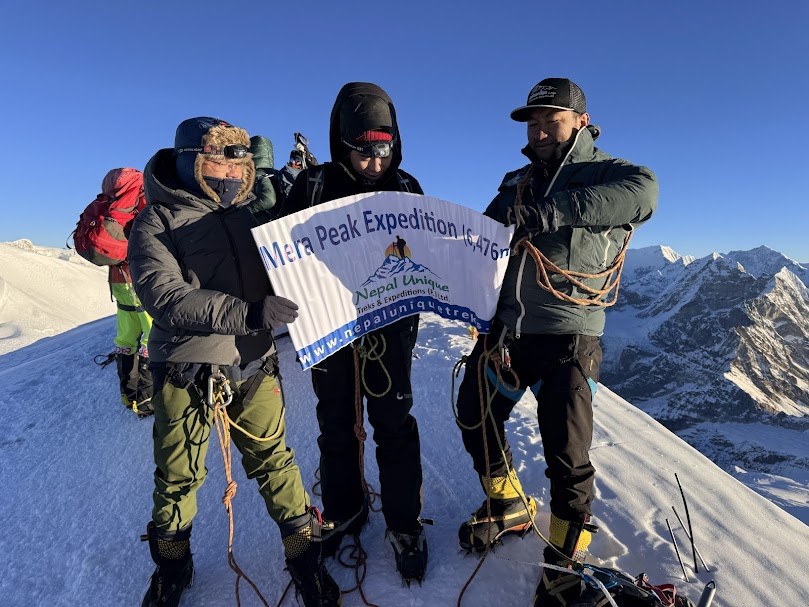
If you've ever stood at Everest Base Camp and looked up at Island Peak's icy pyramid, or stared at photos of Mera Peak's endless summit panorama and thought, "I want to stand up there" you're not alone. Peak climbing in Nepal has quietly become one of the most sought-after adventures in the Himalayas, sitting in that sweet spot between a hard trek and a full-blown mountaineering expedition.
It's not Everest. You don't need $15,000 and three months. But it's also not just a trek you'll be roped up, wearing crampons, swinging an ice axe, and standing on a genuine 6,000-meter Himalayan summit. For a lot of climbers, that combination is exactly the point.
Recommended Trips
Trips You May Like
Hand-picked Nepal trips related to this article.
This guide breaks down everything you actually need to know before booking a peak climbing trip in Nepal permits, real costs, the best seasons, and the peaks worth your time, whether you're a first-timer or chasing something more technical.
What Exactly Is "Peak Climbing" in Nepal?
Nepal's mountains are officially split into two very different categories, and understanding this distinction will save you a lot of confusion when you start researching.
Trekking peaks (NMA peaks): These are 27 officially designated peaks, mostly between 5,500m and 6,500m, regulated by the Nepal Mountaineering Association (NMA) rather than the government's Department of Tourism. Island Peak, Mera Peak, and Lobuche East all fall into this category. They require basic mountaineering skills, using fixed ropes, an ascender (jumar), crampons, and an ice axe, but not technical climbing experience.
Expedition peaks: Everything above 6,500m, including the giants like Everest, Ama Dablam, Manaslu, and Annapurna. These are handled by Nepal's Department of Tourism, cost dramatically more, and demand serious mountaineering experience.
If you're searching for beginner-friendly Himalayan climbing adventure, trekking peaks are almost certainly what you want. They give you the genuine feeling of mountaineering in Nepal, glacier travel, exposure, a real summit push, without needing years of technical training first.
Nepal Climbing Permits: What You Actually Need
This is the part that trips people up the most, so let's simplify it.
Nepal requires every trekking peak climber to go through a registered trekking agency, the NMA issues permits to companies, not individuals, so solo permit applications aren't accepted no matter how experienced you are. Here's the full permit stack you'll need for peaks like Island Peak, Mera Peak, or Lobuche East:
1. NMA Trekking Peak Permit
Fees depend on the season and the number of climbers on your permit, with spring being the most expensive climbing season and autumn costing about the same</cite>. As of the September 2025 fee revision, which remains in effect through 2026:
- Spring and autumn (peak seasons): around USD 350 per climber for a group of 1–4 people, with additional climbers costing extra per person,
- Winter and monsoon (off-season): around USD 175–200 per climber
This is a noticeable jump from the older flat rates of roughly $250 for spring and $125 for other seasons, and the change was made deliberately, the revised structure is meant to support sustainable tourism, improve mountain management, and ensure local communities benefit fairly from climbing activity</cite>.
2. National Park or Conservation Area Permit
Most trekking peaks sit inside a protected area, and you'll need the relevant entry permit:
- Sagarmatha National Park (for Island Peak, Lobuche Peak — Everest region)
- Makalu Barun National Park (for Mera Peak)
- Annapurna Conservation Area (for Annapurna region peaks like Pisang or Chulu)
These generally cost around USD 20–30 per person.
3. TIMS Card (Trekkers' Information Management System)
A separate registration card required alongside your national park permit, generally a modest additional fee.
4. Local Rural Municipality Fee
Some regions now charge their own small entry fee. In the Everest region, for example, the Khumbu Pasang Lhamu Rural Municipality charges a nominal local fee to fund community infrastructure.
5. Garbage Deposit
A refundable environmental deposit collected to fund waste management on the mountain, returned once your team proves it packed out its trash.
One important note: peak permit fees are non-refundable, regardless of whether you actually summit. Weather, health, or route conditions could turn you back, and the permit cost is gone either way, so factor that into your risk tolerance.
Peak Climbing Cost in Nepal: A Realistic Budget Breakdown
The permit is genuinely the smallest line item in your total budget. Here's what a realistic peak climbing cost in Nepal actually includes:
| Expense | Approximate Cost (USD) |
| NMA trekking peak permit | $175–$350 (season-dependent) |
| National park/conservation permit | $20–$30 |
| TIMS card | $15–$20 |
| Certified climbing guide | Bundled into package cost |
| Porter/logistics support | Bundled into package cost |
| Equipment rental (ice axe, crampons, harness, helmet, jumar) | $120 for a full set |
| Domestic flights (Kathmandu–Lukla | Bundled into package cost |
| Travel insurance with high-altitude rescue coverage | $100–$250 Depend on Travel Insurance Company |
| Full guided package (12–17 days | all-inclusive)$2,000–$3,500+ |
For a complete guided trip on a peak like Mera or Island Peak, including permits, a certified guide, flights, accommodation, meals, and climbing gear, expect somewhere in the range of $2,699 to $3,500 per person for a comprehensive 17-day expedition, with total cost shifting based on season, group size, and service tier, Budget operators can bring that down closer to $2,000–$1,800, but check carefully what's excluded (gear rental, tips, and personal insurance are common gaps in cheaper packages).
Money-saving tip: Climbing in a larger group split the fixed costs, permits, guide fees, and logistics, across more people, which meaningfully lowers your per-person price. Shoulder-season climbing (late September–early October, or late April–early May) also tends to combine lower permit costs with still-reasonable weather.
Best Seasons for Peak Climbing in Nepal
Timing your climb correctly matters just as much as choosing the right peak. Here's how the four seasons stack up:
Autumn (September–November) The Gold Standard
Stable weather, clear skies, and excellent visibility make this the most popular season for peak climbing in Nepal. Temperatures are cold but manageable, and this is when most successful Island Peak and Mera Peak summits happen. Expect busier trails and lodges.
Spring (March–May) The Second Prime Window
Also excellent weather, with the added bonus of rhododendron forests in full bloom on the lower trekking sections. This is peak season for Everest region expeditions too, so trails and teahouses get crowded, and permit costs are at their seasonal high.
Winter (December–February) — For the Cold-Hardy
Fewer crowds and lower permit costs, but brutally cold temperatures and shorter daylight hours. Only recommended for climbers with solid cold-weather experience and the right gear.
Monsoon/Summer (June–August) Generally Avoided
Heavy rain, leech-infested lower trails, and poor visibility on summit days make this the least reliable season for climbing peaks in the Himalayas. Some rain-shadow regions like Upper Mustang are an exception, but most classic trekking peaks are best avoided now.
Bottom line: if you can only pick one season, autumn offers the best balance of weather, safety, and summit success rates for most trekking peaks.
Top Himalayan Peaks for Climbing in Nepal
Island Peak (Imja Tse) — 6,189m
The most famous trekking peak in Nepal, and for good reason. Sitting deep in the Everest region near Chukhung, Island Peak is accessible to climbers with minimal experience and combines the scenic beauty of the Everest region with a genuinely rewarding, manageable technical challenge. The summit ridge and a short, steep ice headwall near the top are the technical crux — everything else is a strenuous but non-technical trek. It's often paired with an Everest Base Camp trek for climbers who want both experiences in one trip.
Mera Peak — 6,476m
Nepal's highest trekking peak, and arguably its most rewarding view. Mera Peak Climbing is technically easier than Island Peak Climbing, making it an ideal choice for first-time mountaineers who want serious altitude without extreme difficulty, and its permit fee is among the most affordable of the NMA peaks. The reward at the top: an unmatched 360-degree panorama that includes Everest Expedition in Nepal , Kanchenjunga, Lhotse, Makalu, and Cho Oyu , This five 8,000-meter giants from a single summit.
Lobuche East — 6,119m
A step up in technicality from Mera and Island, Lobuche Peak Climbing involves a genuinely steep, exposed summit ridge with fixed ropes and real climbing movement near the top. It sits right along the classic Everest Base Camp trekking route, making it a natural add-on for trekkers who want to push further and test their climbing skills on the way to (or from) EBC.
Pisang Peak — 6,091m (Annapurna Region)
For those exploring peaks outside the Everest area, Pisang Peak in the Annapurna region offers excellent acclimatization built into its route and stands as one of the best trekking peaks in the Annapurna region Trekking often combined with a partial Annapurna Circuit trek.
Chulu East — 6,584m (Annapurna Region)
A more serious step up. Chulu west peak climbingdelivers a genuine mountaineering experience that demands more fitness and climbing skill than the lower trekking peaks, rewarding climbers with real mountaineering achievement and sweeping views across the Annapurna and Peri Himal ranges. A good next objective for climbers who've already summited Mera or Island and want more challenge.
Everest Region vs. Annapurna Region Peak Climbing
The Everest Region (Khumbu)
Home to Island Peak, Mera Peak, and Lobuche East. This region offers the most iconic scenery in Nepal you'll be climbing in the shadow of Everest, Lhotse, and Ama Dablam. It's also the most infrastructure-heavy region, with regular flights, teahouses, and rescue access, making it the more beginner-friendly choice logistically.
Annapurna Region
Home to Pisang Peak, Chulu East, and Singu Chuli. This region trades some of the Khumbu's crowd-drawing fame for quieter trails, road access (so no dependence on Lukla flights, which are notorious for weather delays), and dramatic Annapurna massif views. It's a strong option if you want a less crowded Himalayan climbing adventure.
Is Peak Climbing in Nepal Right for Beginners?
Short answer: yes, if you pick the right peak and prepare properly. Beginner peak climbing in Nepal is entirely realistic on peaks like Mera or Island, provided you:
- Arrive with solid cardiovascular fitness multi-day trekking endurance matters more than raw climbing skill
- Get basic training on crampon use, ice axe arrest, and jumaring on fixed ropes (many agencies run a short training day at base camp before the summit push)
- Budget extra acclimatization days altitude sickness, not technical difficulty, is what ends most attempts
- Climb with a certified NMA guide Nepal has required a licensed climbing guide for all trekking peaks since 2023, and it's been mandatory for climbing peaks even longer than that.
If this is your first Himalayan climb, Mera Peak's non-technical route makes it the most forgiving entry point, while Island Peak offers slightly more technical exposure for those who want a bit more challenge on their first summit.
The Peak climbing in Nepal offers something genuinely rare: a real Himalayan summit experience crampons, ropes, glacier travel, thin air, and all without needing to commit the money, time, or technical mountaineering background that an 8,000m expedition demands. Whether you're drawn to Island Peak iconic Everest-region views, Mera Peak five-summit panorama, or the quieter trails of the Annapurna region, the key to a good trip comes down to three things: choosing the right peak for your experience level, timing it around autumn or spring, and going with a properly licensed agency that handles your permits and safety without cutting corners.
Nepal's mountains aren't going anywhere. But permit costs, regulations, and seasonal conditions do shift year to year so before you book, double-check current rates with the NMA or Nepal Unique Treks, and start training those legs and lungs. The summit is closer than you think.