Mt Cholatse Peak
Trip Facts
Overview
Cholatse Peak Climbing Overview
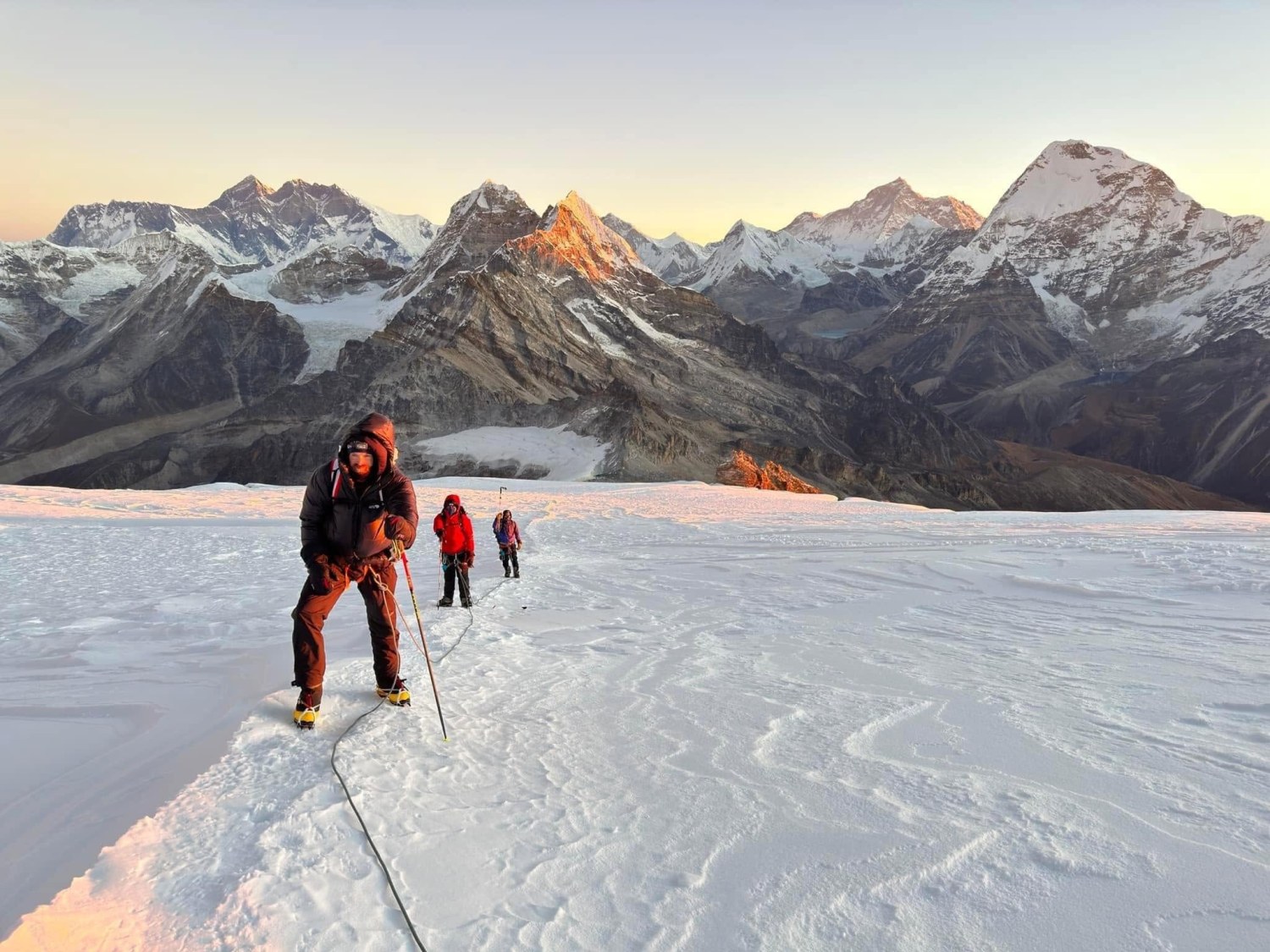
Rising to 6,440m in the heart of the Khumbu, Cholatse (also known as Jobo Lhaptshan) is one of the most striking and technically demanding peaks open for climbing in the Everest Region. Unlike the more straightforward trekking peaks scattered around Nepal, Cholatse Peak Climbing is a serious mountaineering objective steep ice and rock faces, exposed ridgelines, and a summit pyramid that rewards only well-prepared climbers with proper technical skills. If you're searching for genuine Technical Peak Climbing in Nepal rather than a walk-up trekking peak, Cholatse deserves a spot at the top of your list.
The Nepal Unique Treks designs the Cholatse Peak Expedition as a complete journey part classic Everest Base Camp Trek, part high-altitude mountaineering challenge. The route typically begins with a flight to Lukla, followed by the familiar trail through Namche Bazaar, Dole, and Machhermo before branching toward Gokyo Valley Trek. From there, climbers usually cross the dramatic Cho La Pass, connecting the Gokyo lakes with the Cholatse Base Camp Trek and setting up the approach to Advanced Base Camp. This makes our itinerary a favorite among climbers who want to combine Peak Climbing in Nepal with the scenic reward of Gokyo Valley and its turquoise lakes, rather than a purely technical, out-and-back climb.
What sets Cholatse apart from many other 6,440m peaks in Nepal is the climbing itself. The route involves sustained sections of 50–70 degree ice and snow, fixed rope work, and careful rock scrambling near the summit ridge a real test even for climbers with prior mountaineering experience. Because of this, we strongly recommend joining with a qualified Climbing Guide, and our expeditions are led by experienced, government licensed Holder Sherpa climbing guides who know the mountain's moods across different seasons. Their knowledge of rope-fixing, glacier travel, and rescue protocol is what makes a Guided Cholatse Peak Expedition genuinely safer and more successful than attempting it independently.
Timing matters a great deal on this peak. Spring Peak Climbing in Nepal (March–May) and Autumn Peak Climbing in Nepal (September–November) offer the most stable weather windows, with clearer skies, manageable temperatures, and safer snow conditions on the upper slopes. We're already taking bookings for Cholatse Peak Climbing 2026 and Cholatse Peak Climbing 2027, and early planning is worthwhile given the limited number of suitable weather days each season.
On logistics: a typical Cholatse Peak Climbing Itinerary runs close to 20 days from Kathmandu, factoring in acclimatization days, the Cho La Pass crossing, climbing rotations, and a buffer for weather delays. Cholatse Peak Cost varies depending on group size, permit fees, climbing Sherpa ratios, and the level of logistical support you choose, and we're happy to break down a transparent, itemized Cholatse Expedition Cost for 2026 and 2027 so there are no surprises once you're on the trail. All necessary Cholatse Climbing Permits, government liaison arrangements, and safety equipment are handled as part of our climbing packages.
Whether you're an experienced alpinist chasing your next Himalayan Mountaineering objective, or a strong trekker looking to step up into technical Peak Climbing in Nepal, Cholatse offers an honest, demanding, and deeply rewarding route through some of the most beautiful terrain the Khumbu has to offer. Reach out to Nepal Unique Treks, and let's talk about which Cholatse Peak Climbing Package fits your experience, timeline, and goals.
Best Time for Cholatse Peak Climbing
Choosing the right season can make the difference between a smooth summit push and a frustrating, weather-battered attempt on Cholatse. Since this is a technical peak with sustained ice and rock sections, stable weather isn't just a comfort it's a genuine safety factor. Here's how the two main climbing windows compare.
Spring Season (March to May)
Spring is widely considered the best time for Cholatse Peak Climbing, and for good reason. As temperatures gradually rise after winter, the snowpack on the upper mountain settles into more predictable, climbable conditions. Days are generally longer and clearer, rhododendrons are blooming along the lower trekking trails through the Everest Region, and the approach via Gokyo Valley and Cho La Pass is at its most scenic. Late April through May tends to offer the most stable weather windows for the actual summit push, though climbers should still expect a few unsettled days and build flexibility into their schedule.
Autumn Season (September to November)
Autumn is the other prime window for Peak Climbing in Nepal, and many climbers actually prefer it. Fresh from the monsoon, the mountain air is clean, visibility is excellent, and the trails through Namche Bazaar, Dole, and Machhermo are lively with other trekkers and expedition teams. Temperatures are cooler than spring, which can mean firmer, more stable snow conditions on Cholatse's technical sections a real advantage for climbers who prefer crisper ice to softer spring snow. Late September through early November is generally the sweet spot before winter cold sets in at altitude.
What About Winter and Summer/Monsoon?
Winter (December–February) brings extreme cold, high winds, and unstable ice conditions on Cholatse's exposed ridges, making it far riskier and generally unsuitable for all but highly experienced expedition climbers. The monsoon months (June August) bring heavy snowfall, poor visibility, and increased avalanche risk, along with muddy, leech-prone lower trails not ideal for either trekking or technical climbing.
Nepal Unique Treks Recommendation as a Organizer
If your schedule allows, aim for late April to mid-May or late September to late October. Both windows give you a realistic shot at good climbing conditions, manageable acclimatization, and a beautiful trek through the Khumbu beforehand. We're currently taking bookings for Cholatse Peak Climbing 2026 and 2027 in both seasons if you let us know your rough travel dates, we can help you pick the window that best matches your experience level and risk tolerance.
Itinerary
Day 1: Arrival at Kathmandu
Arrival at Kathmandu
Day 2: Kathmandu sightseeing program
Kathmandu sightseeing program
Day 3: Kathmandu to Lukla
Kathmandu to Lukla
Day 4: Phakding to Namche bazaar
Phakding to Namche bazaar
Day 5: hiking around Everest
hiking around Everest
Day 6: Namche bazaar to dole
Namche bazaar to dole
Day 7: Dole to Machermo
Dole to Machermo
Day 8: Machermo to Gokyo
Machermo to Gokyo
Day 9: Gokyo Vally exploration day
Gokyo Vally exploration day
Day 10: Gokyo Lake to dragnag
Gokyo Lake to dragnag
Day 11: Chola Phedi to Chola pass
Chola Phedi to Chola pass
Day 12: Dzongla to Cholatse
Dzongla to Cholatse
Day 13: Cholatse peak
Cholatse peak
Day 14: Cholatse base camp to lobuche
Cholatse base camp to lobuche
Day 15: lobuche to gorakshep
lobuche to gorakshep
Day 16: Explore kalapather
Explore kalapather
Day 17: Pheriche to namche bazaar
Pheriche to namche bazaar
Day 18: Namche to Lukla
Namche to Lukla
Day 19: Lukla to Kathmandu
Lukla to Kathmandu
Day 20: final departure
Farewell and final departure towards the own destination.