Upper Mustang Overland Jeep Tour
Trip Facts
Overview
Upper Mustang Overland Jeep Tour
The Upper Mustang Overland Jeep Tour is one of the most fascinating journeys in Trekking in Nepal, offering travelers the opportunity to explore the ancient Kingdom of Lo without long days of trekking. This adventurous 4WD journey follows the historic trans-Himalayan trade route, passing through dramatic desert landscapes, centuries-old monasteries, mysterious caves, traditional Tibetan villages, and the walled city of Lo Manthang.
Often called "Upper Mustang – Mini Tibet", this remote Himalayan region preserves a unique Tibetan Buddhist culture that has remained largely unchanged for centuries. Due to its geographical isolation and restricted access, Upper Mustang Region Trek has successfully protected its ancient traditions, architecture, language, and spiritual heritage. Whether you are a cultural explorer, photographer, pilgrim, family traveler, or someone who prefers comfortable travel over long-distance hiking, the Upper Mustang Jeep Tour provides an unforgettable Himalayan experience.
Why Visit Upper Mustang?
The Upper Mustang was once an independent Himalayan kingdom known as the Kingdom of Lo. Until the early 1990s, the region remained closed to foreign visitors, allowing its centuries-old traditions to survive almost untouched.
Today, travelers can witness:
- Ancient Tibetan Buddhist culture
- Medieval villages
- Historic monasteries
- Sacred meditation caves
- Stunning red cliffs and desert valleys
- Snow-capped Himalayan panoramas
- Authentic local lifestyle
- The famous Lomanthang King Palace
Unlike the greener trekking regions of Nepal, Upper Mustang features dramatic landscapes shaped by wind erosion, colorful sandstone cliffs, deep canyons, and unique rock formations, making it one of Nepal's most photogenic destinations.
Upper Mustang – The Last Forbidden Kingdom
The Upper Mustang is often referred to as The Last Forbidden Kingdom because it remained isolated from the outside world for centuries. Historically, the Kingdom of Lo controlled an important salt trade route between Nepal and Tibet. Traders carried salt, wool, grains, herbs, and livestock across the Himalayas, making Mustang an economically powerful kingdom. Even today, visitors can experience ancient customs, traditional mud-brick houses, whitewashed monasteries, prayer wheels, colorful prayer flags, and Tibetan festivals that have survived for generations.
Geographical History of Upper Mustang
The Upper Mustang lies in the rain shadow of the Annapurna and Dhaulagiri mountain ranges. Because the monsoon clouds cannot cross these giant Himalayan barriers, Upper Mustang receives very little rainfall.
This unique geography creates:
- High-altitude desert landscapes
- Deep canyons
- Fossil-rich cliffs
- Wind-carved rock formations
- Colorful barren hills
- Vast open valleys
The elevation ranges from approximately 2,800 meters at Kagbeni to around 4,200 meters near Lo Manthang Village and nearby mountain passes. The region borders Tibet, and its landscape resembles the Tibetan Plateau far more than the lush hills found elsewhere in Nepal.
Tibetan Buddhism in Upper Mustang
One of the greatest highlights of the Upper Mustang Overland Jeep Tour is experiencing the deeply rooted traditions of Tibetan Buddhism.
Almost every village contains:
Ancient monasteries
Chortens (stupas)
Mani walls
Prayer wheels
Sacred caves
Colorful Buddhist murals
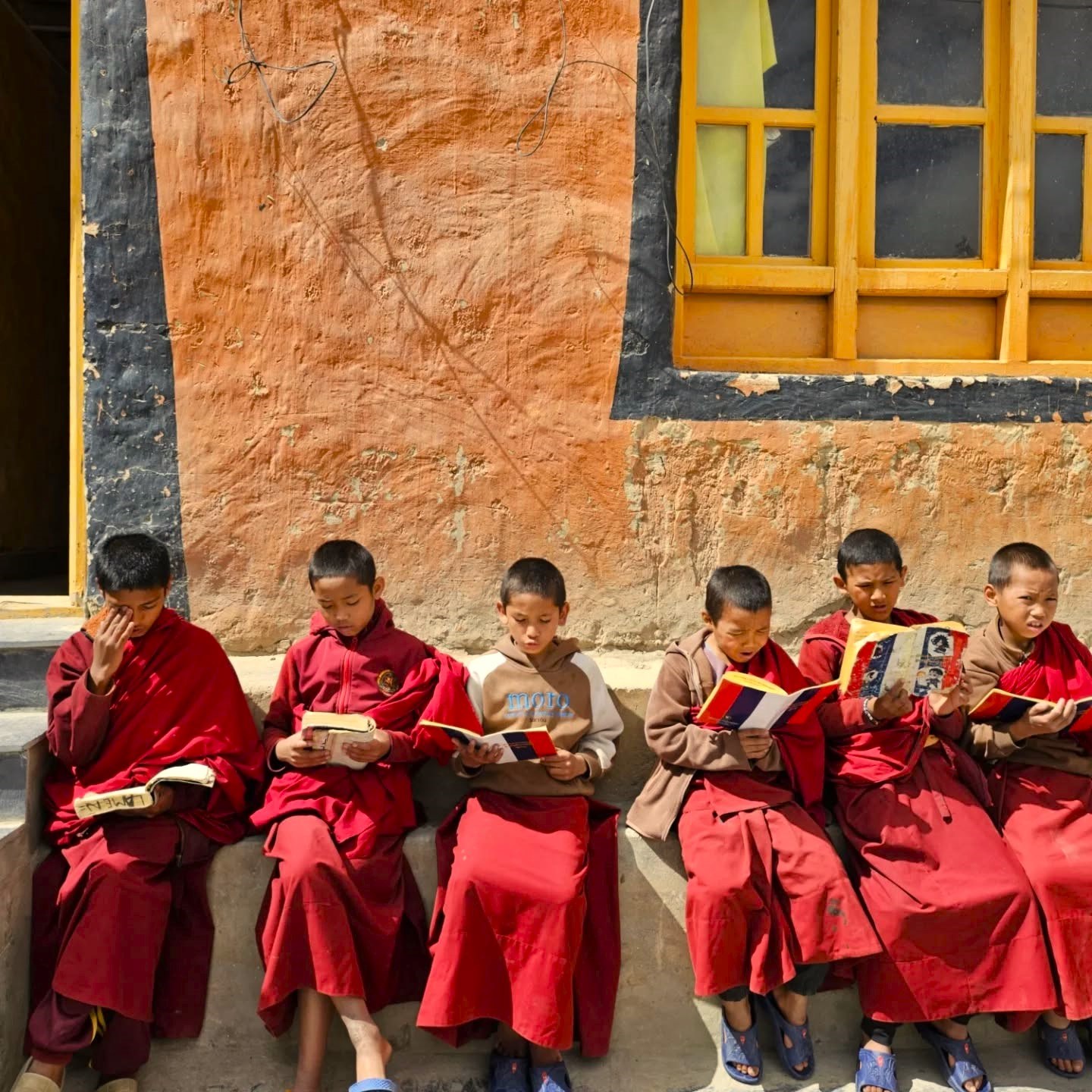
Traditional monks' schools
The local people continue practicing rituals that have been preserved for over 700 years, making Upper Mustang one of the finest places in Nepal to understand Himalayan Buddhism.
Historical Buddhist Pilgrimage Sites
Upper Mustang is home to numerous sacred Buddhist pilgrimage destinations visited by monks, scholars, and spiritual practitioners.
Important pilgrimage sites include:
- Luri Gomba
- Jhong Cave
- Ghami Monastery
- Lo Gekar Monastery
- Charang Monastery
- Chhoser Cave Complex
- Numerous meditation caves used by Buddhist masters
Many believe that Guru Rinpoche (Padmasambhava) meditated in several caves throughout Mustang while spreading Vajrayana Buddhism across the Himalayas.
Lo Manthang – The Walled Kingdom
The highlight of every Upper Mustang Trek and jeep tour is Lo Manthang, the ancient capital of the Kingdom of Lo. Surrounded by impressive mud walls built during the 15th century, Lo Manthang preserves:
- Traditional Tibetan architecture
- Narrow stone streets
- Ancient monasteries
- Royal residences
- Prayer wheels
- Historic chortens
- Local markets
Walking through the town feels like stepping back hundreds of years into medieval Himalayan civilization.
Lomanthang King Palace Located inside the walled city, the Lomanthang King Palace remains one of the most significant historical landmarks in Mustang. Although Nepal abolished its monarchy, the former royal family of Lo continues to hold immense cultural and spiritual importance for local communities.
Visitors can admire:
- Traditional palace architecture
- Royal history
- Cultural artifacts
- Historic courtyards
- Ancient defensive structures
The palace symbolizes the rich heritage of the former Kingdom of Lo.
Upper Mustang Tiji Festival Trek
The Upper Mustang Tiji Festival Trek and Jeep Tour are among Nepal's most extraordinary cultural experiences. The three-day Tiji Festival celebrates the victory of good over evil through colorful masked dances performed by monks.
Festival highlights include:
- Sacred Buddhist rituals
- Traditional music
- Monastic dances
- Ancient costumes
- Community celebrations
- Pilgrimage gatherings
Thousands of local people travel from surrounding villages to participate in this remarkable religious festival.
Kagbeni Village – Gateway to Upper Mustang
Every Upper Mustang journey begins at Kagbeni Village, a charming medieval settlement located beside the Kali Gandaki River.
Kagbeni is famous for:
- Narrow stone alleys
- Ancient mud houses
- Traditional Tibetan culture
- Historic monasteries
- Apple orchards
- Gateway permit checkpoint
Its peaceful atmosphere makes it one of the most picturesque villages in the Mustang region.
Charang Village (Tsarang) is one of Upper Mustang's most beautiful settlements.
Visitors can explore:
- Charang Monastery
- Ancient fortress ruins
- Traditional whitewashed homes
- Colorful prayer flags
- Beautiful agricultural terraces
The village has long served as an important religious and administrative center within the Kingdom of Lo.
Luri Gomba – Hidden Cave Monastery
One of the most sacred destinations in Upper Mustang is Luri Gomba. Built inside natural cliffs, this hidden monastery contains:
- Ancient Buddhist murals
- Meditation chambers
- Sacred stupas
- Tibetan inscriptions
- Historical cave temples
Archaeologists believe parts of the cave monastery date back nearly one thousand years.
Jhong Cave – The Ancient Sky Caves
The mysterious Jhong Cave, also known as the Chhoser Sky Cave, is one of Nepal's greatest archaeological wonders. These man-made caves were carved high into vertical cliffs centuries ago.
Researchers believe they were used as:
- Meditation retreats
- Burial chambers
- Defensive shelters
- Residential caves
Exploring these caves offers incredible insight into the early civilizations of the Himalayas.
Ghami – Home to One of Mustang's Oldest Buddhist Monasteries
The Ghami Village is famous for its peaceful environment, traditional lifestyle, and one of the oldest Buddhist monasteries in Upper Mustang. The village also features one of the longest Mani walls in Nepal, decorated with carved Buddhist prayer stones believed to bring blessings to travelers.
Muktinath Temple
Most Upper Mustang Jeep Tours conclude with a visit to the sacred Muktinath Temple. Revered by both Hindus and Buddhists, Muktinath represents spiritual liberation and harmony between two ancient religions.
Pilgrims visit to experience:
- The 108 holy water spouts
- Eternal natural flame
- Ancient temples
- Buddhist monasteries
- Panoramic Himalayan scenery
The temple attracts thousands of pilgrims every year from Nepal, India, and around the world.
Pokhara to Jomsom – Gateway to Mustang
The scenic journey from Pokhara to Jomsom is one of Nepal's most spectacular Himalayan road adventures.
Travelers pass through:
- Beni, Tatopani, Ghasa, Marpha, Jomsom, Along the route, visitors enjoy, Kali Gandaki Gorge, Waterfalls, Snow-covered mountains, Apple orchards, Traditional Thakali villages, Apple Gardens in Mustang, Mustang is widely known as Nepal's Apple-producing region. Throughout the journey, travelers encounter beautiful apple orchards, especially around , Marpha, Jomsom, Syang, and Kagbeni Village. Fresh apples, dried apples, apple pie, apple cider, apple juice, apple brandy, and homemade jams are local specialties that visitors should not miss.
People and Lifestyle of Upper Mustang
The people of Upper Mustang are primarily of Tibetan origin and have preserved their language, customs, clothing, architecture, and religious beliefs for centuries.
Daily life revolves around:
- Agriculture
- Animal husbandry
- Apple farming
- Barley cultivation
- Buckwheat farming
- Yak and sheep herding
- Traditional handicrafts
- Buddhist festivals
Visitors are welcomed with genuine Himalayan hospitality and have the opportunity to experience authentic mountain culture.
Flora and Fauna of Upper Mustang
Despite its dry climate, Upper Mustang supports a remarkable range of Himalayan wildlife and hardy vegetation.
The region is home Flora
- Juniper
- Himalayan willow
- Poplar
- Wild rose
- Sea buckthorn
- Caragana shrubs
- Alpine grasses
- Medicinal herbs
- Colorful wildflowers during spring and summer
Lower Mustang is also famous for its apple orchards and seasonal blossoms.
Wildlife enthusiasts may encounter (Fauna)
- Himalayan Blue Sheep (Bharal)
- Himalayan Marmot
- Tibetan Wolf
- Himalayan Fox
- Snow Leopard (rare)
- Musk Deer
- Himalayan Griffon Vulture
- Golden Eagle
- Lammergeier (Bearded Vulture)
- Chukar Partridge
- Tibetan Snowcock
These species thrive in the unique high-altitude ecosystem of the Annapurna Conservation Area.
Upper Mustang Trek Cost
The Upper Mustang Trek Cost and jeep tour price depend on several factors, including group size, transportation, accommodation standards, guide services, permits, and travel season.
Typically, the package includes:
- Restricted Area Permit
- Annapurna Conservation Area Permit (ACAP)
- Private 4WD Jeep transportation
- Accommodation
- Professional guide
- Meals during the tour
- Airport transfers
- Government taxes and service charges
Traveling with a reputable local operator ensures safety, reliable logistics, and an enriching cultural experience.
Itinerary
Day 1: Arrival in Kathmandu (1,350m)
When you arrive at Tribhuvan International Airport in Kathmandu, our representative will greet you warmly. Take you to your hotel. After checking in, you can chill out. Explore the lively streets of Thamel. In the evening, we'll have a briefing about your Upper Mustang Overland Jeep Tour. Overnight: Hotel in Kathmandu
Day 2: Full-Day Kathmandu Valley Sightseeing, 1400 m
Today you'll visit some amazing UNESCO World Heritage Sites in Kathmandu Valley:
- Pashupatinath Temple – a Hindu temple dedicated to Lord Shiva
- Boudhanath Stupa – one of the biggest Buddhist stupas in the world
- Patan Durbar Square – an ancient royal palace complex in Lalitpur
- Swayambhunath Temple – a famous hilltop Buddhist shrine
This cultural tour will show you Nepal's spiritual richness before you head into the Himalayas. In the evening, we will manage our Trip gear and acclimatization. Overnight: Hotel in Kathmandu
Day 3: Drive to Pokhara (815m) – 210 KM,7/8 hrs
After breakfast, you can drive (6–7 hours). You'll enjoy views of rivers, hills, and Himalayan peaks along the way. When you arrive, you'll be taken to your hotel near Lakeside. If you are looking for domestice flight from Kathmandu to Pokhara extra cost will be USD$120, Overnight: Hotel in Pokhara
Day 4: Drive to Tatopani (1,190m) – 110 KM 6–7 Hours
Your overland jeep adventure starts today. You'll drive along the Kali Gandaki River valley, passing villages and waterfalls before reaching Tatopani, which is famous for its natural hot springs. Overnight stay at Teahouse Lodge
Day 5: Tatopani to Kagbeni (2,810m) – Visit Muktinath (3,760m) | 5–6 Hours
You'll keep driving toward Kagbeni, the gateway to Upper Mustang. On the way, you'll visit the Muktinath Temple, which is an important pilgrimage site for both Hindus and Buddhists.
After exploring the temple you'll drive to Kagbeni, a village with medieval alleys and Tibetan-style houses. Overnight stay at Teahouse Lodge
Day 6: Drive to Ghami Village (3,520m) via Syangbochen (3,820m) – 32 KM
Today you'll officially enter the region of Upper Mustang. The landscape will change dramatically into arid desert terrain with cliffs and vast canyons. You'll drive through Syangbochen before reaching Ghami, one of the villages in Upper Mustang. You'll explore the mani wall and traditional mud-brick houses. Overnight stay at Teahouse Lodge
Day 7: Drive to Lo Manthang (3,810m) – 17 KM
A short but spectacular drive will take you to the walled city of Lo Manthang. As you approach, you'll see views of the Mustang Valley.
When you arrive, you'll explore:
- Royal Palace of Mustang
- Jampa Monastery
- Thubchen Monastery
- Local markets and traditional homes
Overnight stay at Teahouse Lodge in Lo Manthang
Day 8: Explore Around Lo Manthang (Chhoser & Surroundings)
Today you'll explore villages and mysterious sky caves by jeep. You'll visit:
- Thinkar
- Kimaling
- Chunjung
- Namdruk
- Chhoser Village ( for ancient cave dwellings)
You'll discover centuries-old meditation caves carved into cliffs and experience authentic Tibetan Buddhist culture. Overnight stay at Teahouse Lodge
Day 9: Drive from Lo Manthang to Marpha (2,670m) – 4–5 Hours
After breakfast, you'll start your return journey. You'll drive back through Mustang's desert landscapes and descend toward Marpha, a charming Thakali village famous for apple orchards and traditional whitewashed houses. Overnight stay at Lodge in Marpha
Day 10: Drive from Marpha to Pokhara – 6 Hours
You'll leave the arid Mustang region and return to Pokhara. The changing scenery from desert cliffs to hills is remarkable. When you arrive, you'll be taken to your hotel. Can relax by Phewa Lake. Overnight stay at Hotel in Pokhara
Day 11: Drive to Kathmandu 210 km, 7 hrs. – Farewell Dinner
After breakfast drive from Pokhara to Kathmandu via Pirthibi Highway with White Water Rafting river and beautiful villages of local setelments, it takes 7 hrs 210 km, In the evening, you'll enjoy a Nepali farewell dinner with a cultural performance. Overnight stay at Hotel in Kathmandu
Day 12: Final Departure
After breakfast, you'll be taken to the airport for your journey. Your unforgettable Upper Mustang Overland Jeep Tour will come to an end, with memories of Nepal's hidden kingdom.