Mera Peak Climbing from Khare
Trip Facts
Overview
Mera Peak Climbing from Khare Overview
Mera Peak Climbing from Khare is one of the most rewarding high-altitude adventures in Nepal, combining a remote Himalayan trek with a genuine mountaineering summit. Rising to 6,476 m (21,247 ft), Mera Peak is the highest of Nepal's officially recognized "trekking peaks," and Khare is the last permanent settlement before the mountain, the point where trekking gear is swapped for crampons, ropes, and an ice axe. This makes Khare the true gateway to the climb, a small but busy village where climbers rest, train, and acclimatize before pushing higher.
A Mera Peak Expedition is suitable for fit, determined trekkers who want to experience real glacier climbing without needing prior technical mountaineering qualifications, provided they are properly guided and well acclimatized. It's not a walk-up peak, but it is achievable for strong trekkers with good preparation. What makes it special is the sheer scale of what you see from the top: on a clear morning, the Mera Peak summit delivers one of the widest high-altitude panoramas in the Himalaya, with five 8,000 m giants visible in a single sweep. Few climbs in Nepal offer this much reward for a comparatively accessible technical grade.
Why Choose Mera Peak Climbing from Khare?
Khare sits directly beneath Mera Peak's approach route, giving climbers the most efficient access toward Mera Base Camp without unnecessary detours. From here, the trail moves through raw, glaciated terrain rather than crowded trekking corridors, so the sense of being deep in the Himalaya is immediate.
A Mera Peak climb from Khare offers:
- Direct access toward Mera Base Camp, saving time and energy for the summit push
- Sweeping Himalayan scenery across the Hinku and Hongu valleys
- A genuine Everest-region adventure, away from the busier Everest Base Camp trail
- Real glacier and snow climbing experience using rope, crampons, and ice axe
- Experienced Sherpa climbing guides who know the route's crevasses and changing conditions
- A built-in acclimatization schedule at Khare before the final summit attempt
- Together, these factors make Khare the smartest and most practical base for a Mera Peak expedition.
Mera Peak Climbing Route from Khare
The Mera Peak climbing route from Khare follows a clear progression: Khare Mera Base Camp , Mera High Camp, Mera Peak Summit.
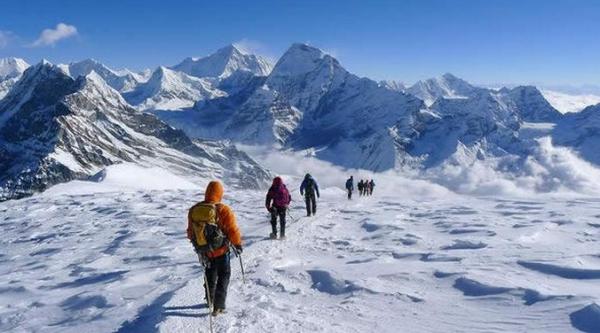
From Khare (around 5,045 m) the trail crosses rocky moraine before stepping onto the Mera Glacier, where the terrain shifts from trekking to genuine glacier travel. Climbers rope together for the crossing to Mera Base Camp, watching for hidden crevasses along the way.
From Base Camp, the route to Mera High Camp (roughly 5,800 m) gains altitude quickly over snow and ice, and this stretch is where fixed ropes and proper crampon technique become essential. High Camp itself is a small, exposed platform with limited space, often battered by wind, but it offers one of the most spectacular sleeping spots in the Himalaya.
Summit day begins in darkness, usually between midnight and 2 a.m., to reach the top before the wind picks up. The final push follows a long, moderately angled snow slope to the summit ridge, where a short, steeper section leads to the true summit and its extraordinary 360-degree view.
Mera Peak Climbing Difficulty
Mera Peak is officially graded as a trekking peak, but this label undersells what the climb actually demands. It is a serious high-altitude undertaking, and climbers should not treat it as an easy add-on to a trek. Key difficulty factors include:
- Altitude: the summit sits above 6,400 m, well within the range where altitude sickness is a real risk
- Long summit day: often 10–12 hours of climbing in cold, thin air
- Cold temperatures: summit-morning temperatures regularly drop well below freezing
- Snow and ice: most of the upper route is snow-covered and requires crampon confidence
- Glacier travel: roped travel across the Mera Glacier requires basic rope discipline
- Basic mountaineering skills: use of crampons, ice axe, ascender, and fixed ropes
- Physical fitness: strong cardiovascular endurance is essential
- Acclimatization: success depends heavily on a properly paced schedule, not just fitness
Is Mera Peak suitable for beginners? It can be, but only with the right support. Climbers with no prior mountaineering experience have summited successfully, but they typically need a slower acclimatization schedule, thorough pre-climb training at Khare, and an experienced climbing Sherpa. Anyone arriving with zero preparation or unrealistic expectations will find the summit day genuinely hard, both physically and mentally.
Mera Peak Climbing Permit and Fees
A Mera Peak climbing permit is mandatory and is arranged through the Nepal Mountaineering Association, alongside standard trekking permits for the Hinku Valley region. Permit costs vary by climbing season (spring, autumn, winter, monsoon) and are subject to periodic government revision, so published prices should always be checked and updated before booking rather than relied on as fixed figures.
Accommodation and Food During Mera Peak Climbing
Accommodation shifts as the route gains altitude. In lower villages, climbers stay in simple teahouses and lodges with basic private or shared rooms. Once past Khare, the trek moves to Mera Base Camp accommodation and Mera Peak climbing camping, using tents at Base Camp and High Camp where no permanent lodges exist.
Meals are typically hearty and carbohydrate-heavy dal bhat, noodles, soups, and porridge designed to fuel long climbing days. Drinking water is available from boiled or filtered sources along the trail, and climbers should expect simpler, more limited food options at higher elevations where supplies must be carried in.
Mera Peak Climbing from Khare vs Other Routes
Route | Main Feature |
| Mera Peak from Khare | Shorter, more direct approach to Base Camp |
| Traditional Mera Peak Route | Longer trekking experience through remote valleys |
| Mera Peak + Amphu Lapcha | Technical adventure linking toward the Everest region |
Mera Peak Climbing with Nepal Unique Treks
Nepal Unique Treks organizes Mera Peak expeditions with a focus on safety, preparation, and steady acclimatization. Our team includes experienced local guides and professional climbing Sherpas who know the Khare-to-summit route in every season, plus quality group climbing equipment and careful safety planning throughout.
We handle permit arrangements, keep itineraries flexible enough to absorb weather delays, and provide airport and trekking support from arrival to departure so climbers can focus on the mountain rather than the logistics.
Book Your Mera Peak Climbing from Khare Adventure
Ready to stand on the summit of Mera Peak at 6,476 metres? Join Nepal Unique Treks for a professionally organized Mera Peak Climbing from Khare adventure with experienced Sherpa guides, carefully planned acclimatization and reliable trekking support. Contact us today for the latest itinerary, availability and Mera Peak Climbing Cost.
Itinerary
Day 1: Meeting and Pre-Climbing Training in Khare (5,045 m / 16,552 ft)
Your Mera Peak climbing adventure starts in Khare, which's one of the key places for acclimatization and preparation on the Mera Peak route. Once you arrive in Khare you will meet your climbing guide and the climbing team for a full explanation about the attempt to reach the summit, the weather, the route and the safety rules.
Today is about training and getting ready for the climb. Your guide will show you how to use climbing tools like crampons, harnesses, ice axes, ascenders, ropes and other special equipment. You will also learn skills such as walking with crampons using an ice axe moving up and down fixed ropes and staying steady on snow and ice.
This training is very helpful for climbers who have not done high-altitude peak climbing before. Your guide will also look at your equipment. Make sure everything is ready for the climb. You will stay overnight in a teahouse or a lodge in Khare. Get ready for the tough climb, to Mera High Camp the next day.
Activities: Climbing training, equipment check, safety briefing, acclimatization
Day 2: Climb from Khare to Mera High Camp (5,780 m / 18,963 ft)6/7 hrs
Today is the day of the real climb toward Mera Peak High Camp. After a breakfast you will leave Khare and start climbing toward the Mera Glacier and toward Mera Peak High Camp.
The trail starts with a rocky stretch before it reaches higher snow‑covered ground. As you climb higher the landscape becomes more rugged and glacial. Depending on the season and the snow you will put on crampons. Use climbing gear as your guide tells you.
The climb to Mera Peak High Camp is physically hard because the terrain is steep and the altitude rises. Your pace will be slow and steady giving your body time to adjust to the air. Your experienced climbing guide will watch your condition all the way up. Give help whenever you need it.
When you reach Mera Peak High Camp at 5,780 meters you will see spectacular views of the surrounding Himalayan peaks. On a day you can enjoy magnificent mountain scenery with sights of Mt Everest, Lhotse, Makalu, Baruntse, Chamlang and other Himalayan giants.
After arriving at Mera Peak High Camp your climbing team will get ready for the summit attempt. You will have a dinner and receive a final briefing, about the summit climb. Because the summit push starts early you will rest as much as you can to prepare for the next day.
Activities: Glacier crossing, climbing preparation, acclimatization, final summit briefing
Day 3: Summit Mera Peak (6,461 m / 21,194 ft) and Descend to Khare (5,045 m / 16,552 ft), 8/9 hrs
Today is the difficult and rewarding day of Mera Peak climbing adventure. I can already sense the anticipation. You will wake up early most often at midnight or in the early morning depending on weather and route conditions. After a breakfast and a final check of equipment you will start the summit climb.
The climb from Mera High Camp happens in high-altitude conditions. You will move slowly across snow and glacier ground using crampons, harnesses, ropes and an ice axe. The climbing guide will lead the group carefully. Keep a safe pace.
As you climb higher the view of the Himalayas becomes more spectacular. When the weather is good you can see many of the worlds mountains, such as Mount Everest, Lhotse, Makalu, Cho Oyu, Kangchenjunga, Baruntse and Chamlang.
The last part toward the summit needs determination and careful steps. After hours of climbing you will reach the summit of Mera Peak, which is at 6,461 meters (21,194 feet). Standing on the summit is an achievement with breathtaking views over the Himalayan range.
After spending time at the summit taking photos and enjoying the scenery you will start your descent. Descending safely is as important as reaching the summit so you will follow the guides instructions carefully while moving down the snow and glacier parts.
You will descend through Mera High Camp. Keep going toward Khare, which is at 5,045 meters. After you arrive in Khare you can. Celebrate your successful Mera Peak summit.